Spotlighting
A recording: episode 3 of Listen, the library read aloud
Three people, one light and one rifle on the back of a ute, and how all of them get home with the right animal.

Three in the tray
Spotlighting works because animals that would be gone in daylight will often stand and stare into a light. That buys you time. The whole craft is spending it well: on working out what is actually standing there, what is behind it, and whether the shot is right, before anybody touches a rifle.
The NSW hunter education handbook describes the team that does it: a driver, a shooter and a spotlight operator. Splitting the jobs, it says, gives the shooter more time to judge whether a safe shot is there, to identify the target and to make the kill a humane one. It sets two limits as well: no more than three people in the group, and the shooter always in front of the light.
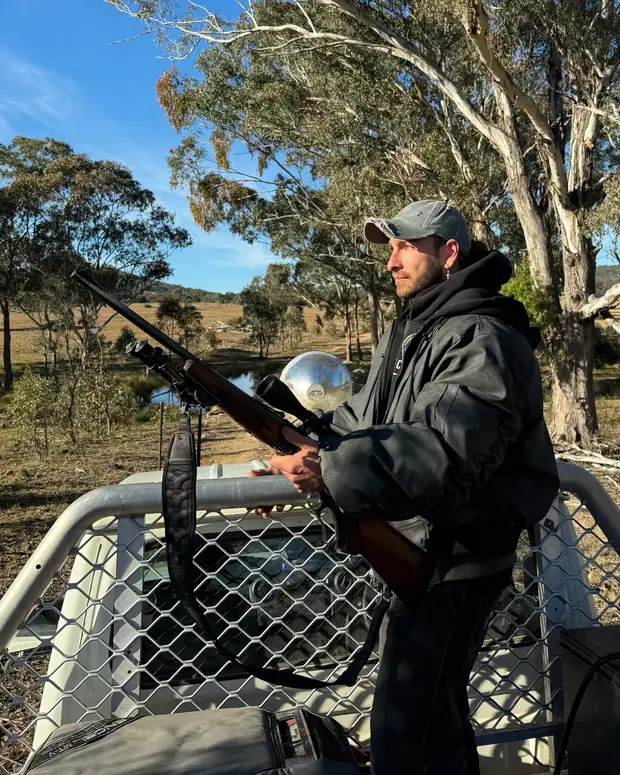
On this weekend the driver stays in the cab and the tray takes three at most: you on the rifle, a guide on the light who calls the shot, and whoever's up next. That's one more than the handbook's team, so the third has one job. Stay behind the light, sitting or holding the rail, and keep still. The national procedure for shooting deer from the ground says a vehicle team needs an agreed safety procedure before anyone loads, so that nobody steps into the line of fire or spoils the shot. This chapter is ours.
The driver
Drives the track, not the light. Stops square and still, handbrake on, engine off for the shot, and doesn't move until the shooter says "clear". The most dangerous job on the ute, and the next chapter.
The light
A guide. Sweeps the edges, finds eyes, holds the animal in the edge of the beam while everyone works out what it is, then names it and names who shoots. One voice. Stands behind the shooter's shoulder, never beside or ahead of the muzzle.
The shooter
You. Sitting or holding the rail while the ute moves, rifle empty and upright. Loads only when the ute has stopped and your name has been called, shoots only off the rest, and unloads and says "clear" before the wheels turn.
Empty, upright, seated
The ute crawls along a track the driver knows by daylight. Every rifle is unloaded and held upright, muzzle to the sky. Anyone in the tray sits or holds the rail. The light sweeps the edges where animals come out to feed.
"Eyes. Two hundred."
The soft outer part of the beam catches eyes long before it shows the animal behind them. The call says roughly where and roughly how far, and the driver eases to a stop. Nothing else happens yet.
"Stopped."
Handbrake on, engine off, feet off the pedals. The ute is a rest now, not a vehicle, and it stays one until the shooter says clear.
"Hold."
The light settles with the animal in the soft edge of the beam, not the hot centre. Everyone is still and nobody loads. Now the real work: what is it, all of it, and what is behind it, beside it and in front of it?
"Fallow buck. Your shot."
Only now does the named shooter get set on the rest and chamber a round, safety on, finger outside the trigger guard. If the call is "no shot", it's no shot, and nobody needs to say why.
"On."
The shooter's go. The light brings the centre of the beam onto the animal and holds it dead still. The safety comes off only with the crosshair on the animal. The shooter's no-go is "no shot": safety on, unload, and the light comes off.
The shot
Stay in the scope and watch. Work the bolt without taking your eye off the animal. The light stays on it, and if it runs, follows it as far as it can, then goes back to the exact spot where it stood.
"Clear."
Bolt open, chamber and magazine empty, shown to the light. Only then does the driver move, and only then does anyone climb down. The light stays on the spot until everyone has picked a mark. Chapter VII picks it up from here.
Fig. 1One stand, from rolling to clear. Drag through it, or tap a step.
Short words, said clearly, meaning one thing each. Everyone on the ute learns them before the first stand.
| The call | Who says it | What it means |
|---|---|---|
| "Eyes" | The light | Something's out there, roughly where and how far. The driver eases to a stop. |
| "Stopped" | The driver | Handbrake on, engine off. The ute is a rest now. |
| "Hold" | The light, or anyone | Everything stays as it is: light steady, animal in the edge of the beam, nobody loading, nobody moving. |
| "Fallow buck. Your shot." | The light | The one voice names the animal and the shooter. Only that shooter loads. |
| "On" | The shooter | The shooter's go: set, loaded, ready. The centre of the beam goes onto the animal and stays dead still. |
| "No shot" | The shooter, or the light | The no-go. Safety on, unload. Nobody has to explain it. |
| "Stop" | Anyone | Everything stops, now. Safety on, the light held. The reason comes after. |
| "Clear" | The shooter | Unloaded, bolt open, shown to the light. Only now does the ute move, or anyone climb down. |
| "Off" | The light | The light comes off the animal, or off altogether. That stand is over. |
Two people calling at once is how the wrong animal gets shot, or how a shot goes off while someone else is saying stop. So one person, the guide on the light, decides what is being shot and who shoots it, and everyone else's job is to say so if they see anything the guide hasn't. Anyone can say "stop", and stop beats everything else that has been said.
The handbook's last spotlighting rule covers what the calls don't: never attempt a shot if there are any safety concerns. "No shot" is always the right answer to a doubt.
The shooter is at the front of the tray, rifle on the roll bar. The light is behind the shooter's shoulder. That is the handbook's rule, and it does three jobs. The beam comes over your shoulder, so you aren't looking into it. The light points where the scope points. And nobody is beside or ahead of the muzzle. The national deer procedure puts it plainly: everyone stands well behind the shooter when an animal is being shot.
Plugs in, all of you
A rifle fired from a tray is loud for everyone on the ute, the driver included. The national shooting procedures ask for hearing protection for the shooter and anyone close by. Ear plugs are supplied: in before the first stand, and in until the rifles are away. Gun Safety has the numbers on what a single unprotected shot can do.
Lore
Long before spotlights, the stage had limelight: a cylinder of quicklime heated white-hot in a flame of oxygen and hydrogen. Thomas Drummond built a working one in 1826, Covent Garden first lit a stage with it in 1837, and it was soon picking out solo performers the way a spotlight does. The lamps are long gone. Being "in the limelight" stuck.
- Warm layers, more than you thinkIt gets into single digits at night, and a ute at walking pace adds its own breeze. Wool or fleece under something windproof.
- A beanie, and gloves you can work a bolt in
- Ear plugs, in before the first standSupplied. The driver wears them too.
- Clear safety glasses for the shooter
- A head torch with a red setting, and spare batteries
- Your phone, chargedFor dropping pins on the firing point and the spot where an animal stood.
- Water, and something to eatNights run long.
- Quiet clothesThe crinkly rain shell stays at home.
Your head torch is a light too
On the tray, keep it off, or on red. A white head torch in the tray kills everyone's night eyes, lights up the shooter's scope, and puts a glowing point where it can be taken for a pair of eyes. Your eyes take about twenty to thirty minutes to adjust fully to the dark. Red light disturbs that least, because the cells that see in the dark barely respond to it.
On the ground it's the opposite: white, and on, so the ute always knows where you are. Never shine it in anyone's face, and never walk out into the dark without it.
Keep it upright
Here is the line that should change how you think about the night. The NSW hunter education handbook says vehicle rollovers while spotlighting are the highest reported hunting incidents in the state. Not a bullet, not a mistaken target. A ute on its side in the dark with people in the back.
It isn't hard to see why. A ute in a paddock at night is doing everything that makes vehicles roll: crawling over ground nobody can see properly, with a driver whose eyes keep wanting to follow the light, and with people standing in the back, which puts weight up high, exactly where it shouldn't be. Nobody in the tray has a seatbelt. Their only protection in a rollover is the ute not rolling.
So the driver's job is the most important one on the ute, and most of it is saying no. No to the shortcut across the side of the hill. No to the gully that's probably fine. No to rolling forward while somebody is still standing up.
The handbook's list for spotlighting from a vehicle starts with the driving: know the hunting area extremely well, learn it in daylight before you spotlight it, drive slowly, stay on roads and tracks, and drive so the shooters don't fall out. Everything below is that list, done properly.
- By daylight
Know the ground first
The tracks we drive at night are tracks we have driven by day. Saturday's drive around the block is when everyone sees where the slopes, the gullies and the soft ground are, and where the banks are that make a safe backstop.
- Moving
Walking pace, on the track
Slow enough that nobody in the tray ever needs to brace. Off the track, long grass hides logs, rocks, stumps and holes, and the wheels find them before the headlights do.
- Always
Eyes on the ground, not the beam
The driver watches the track in front of the wheels. If the driver wants to look at what the light has found, the ute stops first.
- Slopes
Straight up and straight down
Climb and descend the fall line. Never drive across the face of a steep slope, and never turn on one. Cross gullies, banks and washouts straight on, at a crawl.
- Wheels turning
Sitting, or holding the rail
Everyone in the tray sits or holds on whenever the ute moves. Nobody rides on the roof, the tailgate, the bull bar or a wheel arch. Belts on in the cab.
- For the shot
Stopped means stopped
Handbrake on, engine off, and the ute doesn't move again until the shooter says "clear". Nobody climbs into or out of the tray while it's moving, or while a rifle on it is loaded.
- Late
Know when to stop
Tired drivers cut corners. If the driver is cooked, swap, or call it a night. And nobody on the ute has a drink until every rifle is unloaded and locked away.
The weight sits between the wheels
A vehicle tips over when the line straight down from its centre of weight passes outside the wheels on the low side. On flat ground that line is in the middle, as far from tipping as it gets.
The line moves downhill
Tilt the ute and the line slides toward the downhill wheel. Still inside, so the ute stays put. This is the track across the face of the hill that's fine in daylight.
Less margin, same slope
Three adults standing in the tray put their weight a long way up, so the centre of weight rises and the line moves closer to the wheel. Nothing about the slope changed. This is why everyone sits when the ute moves.
This is how they go over
A slope you were getting away with, plus a hole you didn't see, and the tilt jumps in a moment. That's the danger at walking pace: it happens all at once, on ground that seemed fine a second ago.
Square to the slope
Pointed straight up or straight down, the ute stays level from side to side, and the line stays in the middle no matter who is standing. Up and down, never across, and never a turn on the slope.
Fig. 2A ute from behind. Not to scale: the angles and the height of the weight are exaggerated to show the idea.
1. The side slope
The track cuts across the face of the hill. In daylight with everyone sitting it's fine. At night with people standing in the tray, it's the place a ute goes over. Everyone sits for it, the driver takes it at a crawl, and if it's wet or steep, the driver takes the long way round.
2. The gully crossing
Straight down and straight up, square to the banks, at a crawl. An angled crossing puts one wheel low and the other high, which is exactly the tilt in Fig. 2.
3. The washout
Rain cuts trenches across tracks. A wheel dropping into one on the downhill side is how a slope you were getting away with becomes a rollover. Check them by daylight, and check them again after rain.
4. A log in the long grass
Grass hides logs, rocks, stumps and holes. Off the track the wheels find them before anyone sees them, which is why the handbook says to stay on roads and tracks.
5. The gate
Someone has to get down to open it. Every rifle unloaded and shown clear first, the ute stopped, and the person on foot where the driver can see them, head torch on.
6. The dam wall
Narrow, soft at the edges, and a drop on both sides. Not a track to spotlight from, and not one to drive in the dark at all unless it's the only way.
7. The boundary and the road
Know where the boundary is by daylight. Your permission covers this land, not the neighbour's, and a loaded firearm in a public place, a public road included, carries up to ten years in NSW (Crimes Act s 93G). Keep the light off the road too: you'll dazzle whoever is driving it.
8. The stock paddock
Where the cattle are tonight is part of the guide's briefing. The national shooting procedures say to keep lights and shots away from sensitive stock such as horses and lambing ewes, which can panic and run into fences.
Lore
The ute is an Australian invention. The story goes that in 1932 a farmer's wife in Victoria wrote to Ford asking for a vehicle to go to church in on Sunday that could take the pigs to market on Monday. Ford Australia's designer Lew Bandt drew a coupé with a tray behind the cab, and it went on sale in 1934.
Working the light
A spotlight is two lights in one. The bright centre of the beam, the hot spot, is what you identify an animal in and what the shooter aims by. Around it is a much wider, dimmer spill. The spill finds eyes. An eye catches even weak light and throws it straight back at the lamp, so eyes show up at the edge of the beam long before you could make out the animal they belong to.
That gives the person on the light a simple job that's hard to do well. Sweep the spill slowly along the edges where animals feed. When eyes come back, stop, and hold the light so the animal sits in the soft edge of the beam, not the hot centre, while everyone works out what it is. Only when the shooter is set and calls "on" does the centre go onto it, and then it stays there, dead still, until the shot or the "no shot".
Why the edge? Mostly experience. Spotlighters find an animal held in the soft edge stands longer than one hit in the eyes with the full beam. The national procedure for shooting foxes records the sharp end of the lesson: foxes learn quickly, and one that has been frightened under a light may not face one again.
And why so still? Because the shooter is aiming at something lit by your hands. A beam that wanders or bounces makes the animal flicker in the scope, and a shooter who is waiting for the light is not watching the animal.
You're on the light. A doe is feeding along the edge of the timber somewhere out there. Sweep until the eyes come back, hold her in the edge while the shooter gets set, then put the centre on her when the shooter calls "on". Try it with the red filter too.
White light: the light you name the animal in.
Find the eyes
Drag the slider to sweep the light along the edge of the timber. The soft outer part of the beam will find her eyes before the bright centre shows you the animal.
Fig. 4A practice stand. How the doe reacts is drawn from spotlighters' experience, not measured, but the habit it teaches is the right one.
- Lumens
- The total light a lamp puts out, in every direction it puts it. Big lumens can mean a wide flood that reaches nowhere.
- Candela
- How intense the beam is at its brightest point. This is what decides how far a lamp reaches.
- Beam distance
- Under the ANSI FL1 standard, the distance at which the light falls to 0.25 lux, about a full moon's worth. It's the square root of the candela divided by 0.25, so a 100,000 candela lamp rates about 630 metres.
Fig. 5A 100,000 candela lamp. Light falls with the square of the distance: double it, and the animal gets a quarter of the light. The eyes keep shining far past the point where the animal around them goes dim.
White
White light shows colour: a coat, spots, antlers or the lack of them, a pouch, an ear tag, and afterwards, the colour of the blood. The NSW handbook asks for lights bright enough to positively identify the target, and white is the light that shows you the most.
Red
The national deer procedure lists a red filter as a way to cut the light deer see, along with shooting on moonless nights, to keep a mob calm. Fallow have no red-sensitive cone, so red looks dim to them, not invisible (Senses has the detail). The cost is yours: a filter throws away most of the lamp's light, and in red, everything is one colour. Spots, coat and blood go grey-red together.
Amber
Some spotlighters swear by amber, mostly for foxes and pigs. There's no good research we know of that puts it ahead of red, so treat it like red: fine for finding, not for naming. When it's time to decide what it is, switch to white.
Corded lamps and the ute's battery
A corded lamp runs off the ute's 12 volts. The national fox procedure still lists a handheld spotlight of at least 100 watts, a number from the halogen days. At 12 volts that's more than 8 amps, straight out of the battery whenever the engine is off. The engine is off for every shot and on while you drive between stands, which is what keeps the battery up.
Battery packs in the cold
Lithium packs give less when they're cold and get it back when they warm up. Battery University puts a cell at about half its capacity at minus 18. Nights here won't go near that, but a pack riding in an open tray in the wind still runs short sooner than it did on the bench. Keep the spare in an inside pocket.
When a light gets hot
LED lamps get hot at the back, and many dim themselves when they do, to protect the LED. A light that seems to fade during a long hold may be cooling itself down, not going flat. Some lights even sense a covered lens and dim to stop the heat damaging it or whatever is on it. Don't count on yours: never lay a lamp face down on a seat, a swag or a jacket while it's on.
A new moon
This weekend is about as dark as nights get. The moon sets before the sun on both Friday and Saturday and doesn't rise again until dawn, and it turns new at about 2:50 on Sunday morning. Dark suits the light: the beam stands out and eyes shine hard against black. The national deer procedure lists moonless nights as one way to keep a mob calm.
Wind
A light hides nothing from a nose. At night the air drains downhill and settles in the low ground, so a ute on a ridge track is spilling its scent into the gullies below. Where you can, work into the wind, and expect animals downwind of the ute to be gone before the light gets to them.
Rain, mist and dust
A spotlight in rain, mist or dust lights up the air in front of you, the way high beams do in fog. If the beam is full of glitter, you can't identify anything past it. Wet nights are also when the tracks turn greasy and the driving gets harder.
Lore
Up north, October's full moon is the hunter's moon. In the old almanac telling it's the full moon after the harvest moon, and it rose soon after sunset and lit the cleared fields so hunters could keep at it well into the night. This year it's full on 26 October, two weeks after this weekend. Spotlighters want the opposite, and on this trip they get it.
What eyes can tell you
Behind the retina of a deer, a fox, a cow, a sheep, a cat or a dog sits a reflective layer called the tapetum. Light that gets through the retina without being caught bounces off it and goes back out, which gives the animal a second go at seeing in the dark. The eye works as a retroreflector: the light goes back the way it came.
So eyeshine is brightest for whoever is standing at the light. The person on the lamp and the shooter just in front of it see eyes that a mate standing well off to the side may not see at all. And eyes only shine while the animal is looking roughly toward you. When it turns its head, they go out.
Eyeshine is a gift and a trap. It finds animals you would never have seen, a long way past the distance at which the beam shows a body. But two glowing dots tell you very little, and every one of the things they could be has been shot by somebody who was sure.
Eyes can tell you, roughly
- That something is there
- Where it is, and how far
- How many, and whether they're bunched
- How high off the ground
- How it moves: bobbing, trotting, staring, walking in
- Which way it's looking
Eyes can't tell you
- What it is
- Whether it's standing clear, or half behind a log
- Whether another animal is standing behind it
- Buck or doe, calf or goat, fox or somebody's dog
- Whether it's an animal at all
- What's behind it, beside it, or in front of it
Never at eyes, never at a reflection
The NSW handbook says it in one line: never fire at a pair of eyes or a reflection. The national fox procedure warns that shots taken at eye shine are how other animals, livestock included, get hit. New Zealand's firearms code records reflections from head torches being taken for animal eyes, with people killed. Gun Safety has that story.
The rule has no exceptions and no distance at which it relaxes. If all you can see is eyes, the light holds and waits for the animal to show itself, and if it doesn't, it's no shot.
Field Craft ranks the clues in eyes from least reliable to most: colour, height, spacing, then movement. Read them all together, and trust movement most and colour least. Colour varies within a species and with age, and it shifts with the angle and the colour of your light. Use the table below the way you'd use a rumour: worth knowing, never enough to act on.
| What's there | Shine, roughly | Height, roughly | How it moves |
|---|---|---|---|
| Fallow | Pale and bright, white to green | Belt to chest high, head up | Often a mob, still and staring, then all go at once |
| Kangaroo | Dull, often reddish, weak beside a deer | About a deer's, upright. Much lower feeding | Bobs up and down as it hops off |
| Fox | Very bright. Pale yellow in young foxes to golden yellow in adults, says the national fox procedure. Can look white in a big lamp | Knee high or lower | Trots, stops, looks back over a shoulder, often circles |
| Goat | Bright, and varies | Belt high or lower | Bunches and stares. Almost never alone |
| Cattle | Big and bright, greenish to blue-white | Chest to head high, widest apart of anything | Slow. Often walks toward the light |
| Sheep | Greenish to gold | Waist high or lower | Bunch up and stare, move off together |
| A head torch | One steady point, often brighter than any eye | Head height | Moves when a person moves |
| A reflector | Steady. Never blinks | Wherever it's nailed | Never |
Fig. 8Rough clues from experience, the same ones as the eyeshine figure in Field Craft. Never one clue alone, and never instead of seeing the whole animal.
The whole animal
Head, body, legs, coat and spots, plainly. Even here, the work is the same: all of her, then what's behind her.
Still plainly a doe
A quarter of the light she had at 50 metres, and half the size. Still all there to see.
The detail goes first
Smaller and much dimmer, while the eye is as bright as ever. Through a scope you'd still see her, but colour and spots are going.
A pale shape around two lights
You know something is there. You don't know what, and you certainly don't know what's behind it.
Eyes, and nothing else
Her eye still sends your light straight back to you. Her body isn't getting enough of it to show. This is where people talk themselves into a shot, and it's exactly what the rule is for.
Fig. 9The same doe walked out into the dark, roughly as a big lamp shows her to the bare eye. A scope shows you more, and still not enough.
Lore
Tapetum lucidum is Latin for "bright tapestry". People don't have one, which is part of why we're hopeless in the dark next to a deer. The red eye in a flash photo is a much weaker reflection from the blood-rich layer at the back of our own eyes.
Name the whole animal
Naming an animal at night is the same job as in daylight with most of the clues taken away. Colour fades past the centre of the beam. There's nothing near the animal to give you its size. And you're excited, which is exactly when the brain fills the gaps with what it hopes to see. Gun Safety has the numbers on how that ends.
So you work through it the same way every time. First the whole animal: head, body and legs, standing the way that animal stands. Then the details that matter for that animal tonight. Then what's behind it, beside it and in front of it. If any of it is uncertain, the call is "hold", and if it stays uncertain, it's "no shot".
The NSW hunting code of practice puts the standard in one line: shoot only an animal you've clearly identified, with no discernible risk to people or property. The kangaroo code says the animal must be standing and clearly visible. If the light can't tell you what it is, it isn't anything yet.
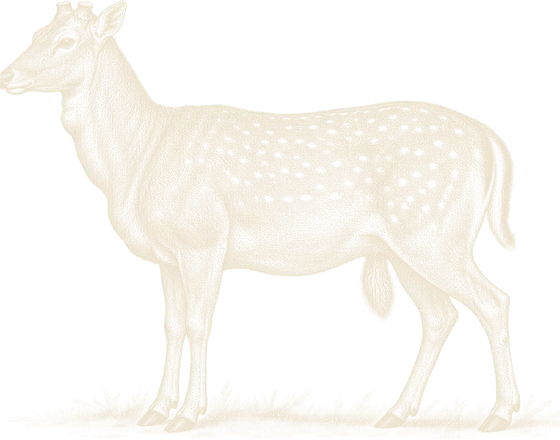
Antlers, or the brush
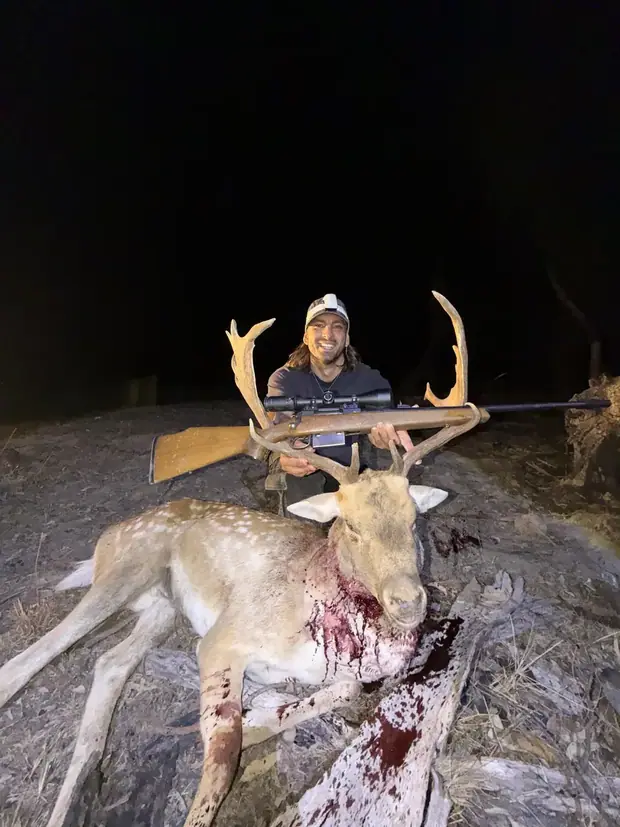
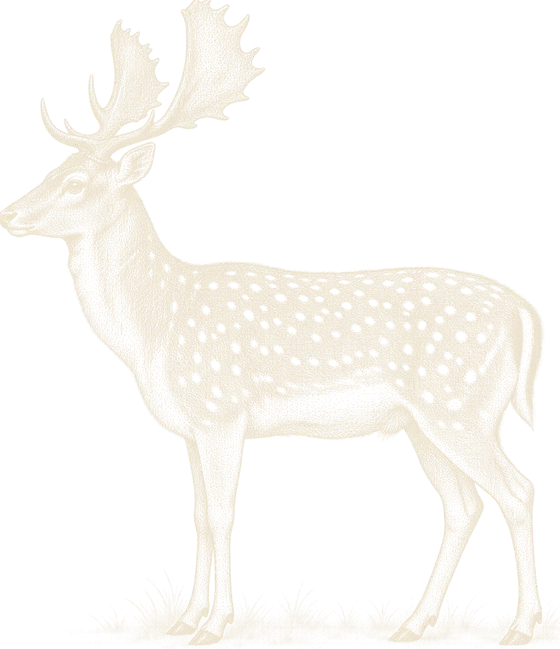
In October some bucks still carry last season's hard antler, broad palms and all, and some have just cast it. The Deer Year has the timing. A buck that has cast looks like a doe at a glance: same size, same spots, and nothing on his head but two bare pedicles.
So before anyone calls a doe, look under the belly for the brush. A thick neck running into heavy shoulders says buck too. The Animal has the rest.
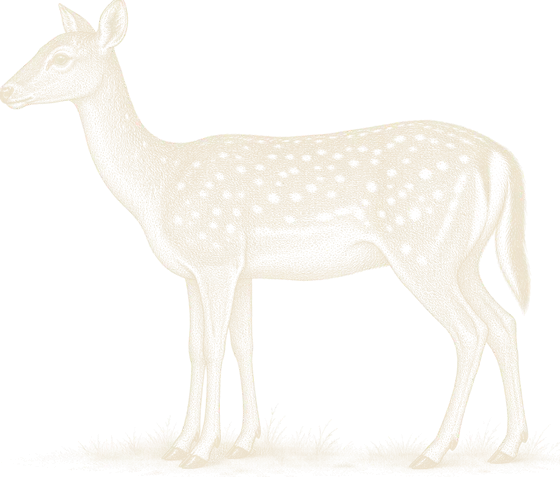
Heavy, in October
Smaller and finer than a buck, with no brush and no pedicles. In October most adult does are heavily pregnant, with fawns due from late November. Last summer's fawns are nearly a year old: smaller, and usually close to a doe.
NSW has no closed season, so whether a doe is taken this weekend is an ethical call, not a legal one, and on someone else's land it's the guide's call. Ethics walks through both sides of it.
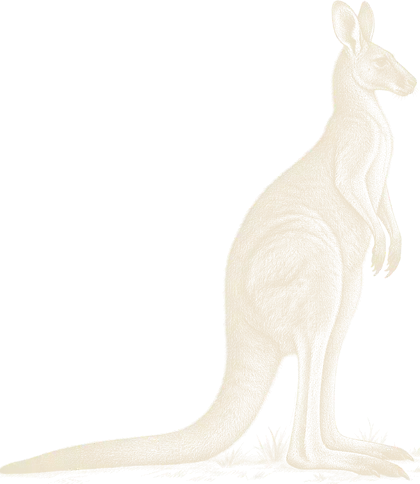

Protected, and shot to the code
Upright, a small head with big ears, short arms held in front, and a thick tail resting on the ground. In the light the eyes are often dull and reddish, and there's that bob as it hops off. Feeding, a roo is bent low on all fours and easy to misread.
Roos are protected. Silent Grove culls them under the landholder's licence to harm, to the national code: a rifle shot to the brain and nowhere else, the roo standing still and clearly visible, never from a moving vehicle, and each one dead before the next is targeted. Leave a female with obvious young, a heavy pouch or a joey's head showing. If a female is shot, her pouch is checked at once, and Matt or Leif deal with any young.
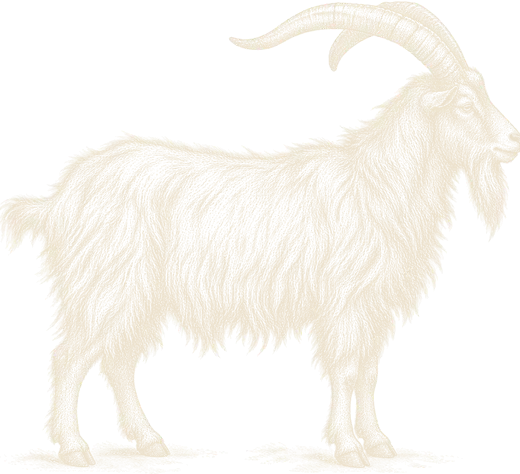
Never just one
Feral goats are almost never alone. Look for the beard, and horns that sweep back on a billy. A mob bunches and stares into the light, then moves off together.
They're pests in NSW, and a resource too: some landholders would rather a mob was mustered and sold than shot. Whether goats are on tonight's list is the landholder's call, passed on by the guide. And goats love rock, which is a ricochet waiting behind them.

Small, quick, and learns fast
Low to the ground, big ears, a bushy tail with a white tip, and eyes as bright as anything out there. Foxes trot, stop, look back over a shoulder and often circle. Wait for one to stop, side on, in the light.
It's a small target. The national fox procedure is blunt: once you've identified one, don't fire unless you're sure it will be killed, because a fox that's been frightened under a light may never face one again. Foxes carry hydatid tapeworm, so gloves to handle one.

Somebody's livelihood
Cattle eyes are big, bright and wide-set, high off the ground, and cattle often walk toward the light for a better look. Sheep bunch up and stare. With nothing near it for scale, a calf or a sheep can pass for something else entirely.
Horses and lambing ewes are easily frightened by spotlights and gunshots and can hurt themselves on fences, which is why the national shooting procedures say to keep away from paddocks that hold them. Where the stock are tonight is part of the briefing.

Anyone on foot
The landholder checking a trough. A neighbour on the boundary lane. Another vehicle on the next ridge. One of us, walking back after fetching an animal. A head torch at 200 metres is a single bright point at head height, and New Zealand's firearms code records head torch reflections being taken for animal eyes, with people killed.
Anyone on foot means every rifle on the ute is empty, and the light comes off their face. When you're the one on foot, your head torch stays on, white, so the ute always knows where you are.
Fourteen stands from a night on the ute. In each one, sweep the light until you find something, look at the whole animal and past it, then make the call. Drag across the picture to aim the light, or use the slider. Every call is explained, and then the scene lights up so you can see what was really there.
Edge of the gums
Stand 1 of 14The guide has called it, and named you. You're set on the rest.
Sweep the light
Nothing to decide yet. Find what's out there.
Fig. 10Fourteen stands. The engravings are drawn to show what matters in each one, not to scale.
The buck that cast
No antlers, so he reads as a doe. Look for the brush under his belly before anyone says doe.
The one behind
Two animals lined up read as one in a beam. A bullet can go through the first and hit the second.
The swap
It walks behind a bush and something walks out the other side. If it leaves the light, it's unidentified again.
No sense of size
With nothing beside it for scale, a fox can pass for a cat or a working dog, and a calf for a goat.
The thing that stares back
Reflectors, glass, a bottle, a guide post on the road. They shine like eyes, and they never blink.
The dark coat
A black fallow can give you eyes and almost nothing else. Wait for it to turn, or move, or go.
Under 75 metres, among mates
The worst of this happens close. New Zealand's records show most hunters shot by mistake were in the same party as the shooter and less than 75 metres away. Gun Safety has the figures. At night that is someone walking back to the ute, someone at a gate, someone checking a trough. Name the whole animal, every time, however close it is.
The arc and the shot
A ute tray is a small space holding three people, a light and a rifle, moving through the dark. Everything in this chapter comes back to two questions you should be able to answer at any moment. Where is the muzzle pointing? And if the rifle fired now, where would the bullet stop?
The rifle's life on the ute has two states and nothing in between: empty and upright while anything moves, loaded and on the rest only while the ute is stopped and the shot has been called. The changes from one to the other are where mistakes happen, so they're done the same way every time.
- Rolling
Empty and upright
No round in the chamber or the magazine while the ute moves, not even to the next tree. Rifles ride upright, muzzle to the sky, never across the cab or anyone's head.
- Called
Load on the rest
Only once the ute has stopped and the guide has named you. Muzzle out over the roll bar into the night, finger outside the guard, safety on until the crosshair is on the animal.
- No shot
The round comes out
"No shot" means unload, not wait loaded. If the animal shows again, the guide calls it again.
- Before it moves
Clear, out loud
Bolt open, chamber and magazine empty, shown to the light, and the word "clear". The driver waits for the word.
- Getting down
Empty first, always
Hand rifles down with the bolt open, never by the muzzle, and never lean one against the ute. Rifles slide, fall and fire.
Agree the shooter's arc of fire before the first stand: forward of the roll bar, from about ten o'clock round to two, with the light behind your shoulder. Then the arc is only half the question. Tap the map to put an animal somewhere on the block, or pick a spot below, and see where a bullet fired at it would go.
In the tray
On the block
Where would the bullet go?
The line from the ute through the animal is where a bullet goes, hit or miss. Tap the map, or choose a spot above.
Fig. 11An imaginary block, drawn to scale: the shots are at 100 to 170 metres, with the ground behind them where it really would be. The 450 metre mark for a level shot from a tray comes from Gun Safety.
A spotlight shows you the animal and almost nothing behind it. The national shooting procedures say it plainly: the light covers a small part of the area, and a fraction of the range of the rifle. So the backstop can't be judged from the tray at night. It has to be known.
That's what the daylight is for. On Saturday's drive around the block, notice where the banks are, which edges have rising ground behind them, where the boundary runs and where the stock are kept. At night you shoot at animals standing in front of ground you have already seen.
The handbook's list covers the rest: never shoot over a crest or a hill, take extreme care with ricochet across hard ground or water, and pay particular attention near fences, boundaries, roads and tracks. Add rock, which the granite country inland of Tenterfield has plenty of, and a second animal standing behind the first.
- The roll bar
- The night rest. A folded jacket or a bag on the bar, the fore-end on that, never the barrel on bare metal. Rest on something hard and the rifle can bounce and throw the shot high, the handbook warns.
- A bipod
- The handbook's spotlighting list asks for a solid one fitted to the rifle. Its feet on the bar or the roof, padded, it makes a steady rest.
- The bonnet
- A fine bench by day, and where you'll shoot the plates and the gong. Off the ute at night the roll bar is the better rest: it keeps you in the tray, ahead of the light, with nobody on the ground.
- On foot
- Where the ute can't go, we get out and stalk in on foot, into the wind, and Field Craft covers the stalk. The rules come with you: sticks or a tree for a rest, the light behind your shoulder, one voice, and a round in the chamber only when the shot is called.
Lore
"Ricochet" comes from French, where in the fifteenth century it meant the skipping of a shot, or of a flat stone on water. Which is exactly what a bullet does off a dam at a shallow angle.
The beam flattens everything. With nothing beside the animal for scale and no ground you can see between you and it, distance is the first thing your eyes get wrong.
Range it. A laser rangefinder brings its own light, so if the animal is in the beam, you can range it. Know the ground. Distances learned by daylight, from the track to the fence, the dam or the edge of the gums, beat any guess at night. Turn the scope down. At low power the picture is wider and as bright as your eye can use, which Optics explains. Stay inside your distance. Shot Placement defines it: the range at which you put the first shot inside a 20 centimetre circle, from the position you're in, every time. For a roo's brain the target is far smaller than that, and the code's 200 metres is a ceiling, not a target.
- Called, by name, by the light
- Stopped, engine off, everyone still
- The whole animal, named, in white light
- Standing still, nothing in front of it
- Nothing behind itNo second animal lined up behind the first.
- Earth behind itNever a crest, never water or rock.
- Nothing on that line you didn't see by dayNo fence, road, house or stock.
- On the rest, inside your distance
- The light on it, and still
The law at night, in New South Wales
No NSW law bans spotlighting, thermal or night vision for deer, pigs, goats or foxes on private land, and shooting from a stopped vehicle on private land isn't banned either. While a firearm is actually being used, the rule that it travel unloaded and out of sight stops applying (Firearms Regulation cl 149(3)). Never from a moving vehicle: the kangaroo code bans it outright and NSW's deer code says the same. On declared public land, firearms are daylight only and vehicle spotlights are banned.
Having a loaded firearm in a public place, or firing in or near one, carries up to ten years, and a firearm counts as loaded with a round in the chamber or in a fitted magazine (Crimes Act s 93G). Handling one under the influence of alcohol or any drug carries up to five (Firearms Act s 64). A shot that crosses onto land you have no permission for is its own offence (s 93H). Kangaroos are protected, and shot only under the landholder's licence to harm. This is a plain-English field reference current as of October 2026, not legal advice, and The Law in NSW has the detail.
After the bang
At night, the minutes after the shot go wrong in ways they don't by day. The animal is out of the beam in two bounds. Everything looks the same in every direction. The ute rolls ten metres and the firing point is gone. Somebody climbs down while a rifle on the tray is still loaded.
The cure is a routine everyone on the ute knows, done the same way every time. Most shots kill cleanly and the routine is just a careful walk to collect the animal. It's the shots that weren't clean that it's for, and you never know which one you've got until you've looked.
Shot Placement and Tracking cover reading the reaction, the blood and the trail. This chapter is what changes when it's dark.

- The shot
Watch, reload, and the light stays
Stay in the scope and watch. Work the bolt without taking your eye off the animal. The light stays on it, and if it runs, follows it while it can, then goes back to the exact spot where it stood.
- Down in the light
The finishing shot comes from the tray
If it's down and in sight, watch it for a few minutes in the light. If it moves or tries to get up, the next shot comes from where you are: on the rest, light on it, the same checks. Nobody climbs down to do it.
- Before anything moves
Mark it
The ute is the firing point, so it doesn't move until the spot has been found. Drop a pin. Pick a landmark in the beam where the animal stood, a stump, a lone tree, a pale tussock, and say it out loud so everyone has the same one.
- Then
Wait
Down and still in sight: a few minutes. Out of sight, or not sure of the hit: at least half an hour before anyone goes to where it stood. Liver or gut: hours, which at night usually means first light.
- Before anyone climbs down
Every rifle empty
Every rifle on the ute unloaded and shown clear. The handbook's spotlighting list says the same thing: unload before you collect an animal.
- On foot
Walk up the beam
With every rifle empty, the light holds on the spot and the walker goes up the beam with a head torch on, white. Come at a downed animal from behind, on the spine side, away from the legs and the antlers.
- At the animal
Make sure
No breathing, eyes open and glazed, no twitch of the ear, and no blink when the eye is touched with a long stick. Any doubt at all, the guide decides how a finishing shot is taken, and from where.
Go to where it stood, not to where you think it went. Look for blood, hair and scuffed ground in slow circles, in white light. Coloured light changes what blood looks like, and the colour is half of what blood tells you: frothy and pink is lung, dark is liver, watery with green in it is gut. Tape the spot. Then follow, taping a branch every few metres, five in the NSW handbook, walking beside the trail rather than on it, with your eyes ahead as much as down.
The UK Deer Initiative calls following blood by torchlight very difficult without a dog. If the trail thins out, if the blood says liver or gut, or if it heads into thick scrub, stop. Tape the last sign, drop a pin, and come back at first light, which this weekend is a bit before six. Pushing a wounded animal through the dark is how it gets lost for good.
Fig. 13The same rules of thumb as Tracking, from hunter education sources. If you can see it down, a few minutes is enough.
It ran out of the light. Do we drive after it?
No. The ute is the firing point, and driving after a hit animal at night means a moving ute over ground nobody has looked at. Mark it, wait, then walk.
It's gone down on the other side of the boundary fence.
Your permission covers this land, not the neighbour's. Nobody crosses that fence, with a rifle or without one, until the landholder has sorted it out. The Law in NSW explains why.
Won't foxes or pigs get to it overnight?
Sometimes. That's the cost of a shot that wasn't clean, and the animal's welfare comes ahead of the meat. Pushing it in the dark risks losing it altogether.
Is anything different for roos?
Each roo has to be dead before the next is targeted, and a shot female's pouch is checked straight away. Matt or Leif deal with any young, as the code sets out.
How do we find the spot again in the morning?
The pin on the phone, the tape on the stem, and the landmark everyone agreed on. Bring the same people back: they know what the place looked like in the light.
The end of the night
Rifles first: unloaded, proved clear by two people, cased and locked away. Only then a drink, if you want one. Then the animals: whatever is down gets skinned and hung before anyone sleeps. Field to Freezer has that part.
When you're ready, try the field game.