The library
Volume XXV

The NZ Directory

A recording: chapters 6 to 8 of episode 8, If it goes wrong

Who runs what in New Zealand hunting, what each of them means for this trip, and where to look it up yourself.

  •  
  • 7 chapters
  • New Zealand
An engraving of a wooden signpost in the tussock beside a backcountry hut with smoke rising from the chimney, under glaciers and high peaks
I
The lie of the land

Who runs what

New Zealand hunting has a lot of organisations, and from the outside it is hard to tell who does what. The short answer is six groups: the people who look after the land, the people who license the rifle, the people who speak for the animals and the hunters, the people who forecast the weather and the snow, the people who come and get you, and the people at the border.

Every game animal in New Zealand was brought in by people. Apart from bats there were no land mammals at all, so deer, tahr, chamois, pigs and goats are all introduced, and the rules around them reflect that: part game, part pest, depending on who you ask and where you are standing.

None of the organisations in this book are paying to be in it. Tap a circle to see who sits in each group.

Lore

Te Ara, the official encyclopedia of New Zealand, records that tahr were brought in by the government in 1904 for sport, "especially for tourists". By the 1950s North American hunters were hiring guides to hunt tahr and chamois around Aoraki/Mount Cook. You are in a long line.

You on the hill The land The rifle The game Weather Help The border
Fig. 1Six groups around one hunter. Tap or hover a circle.
II
Every link, by need

The directory

Every organisation worth knowing about for this trip, with what it is, what it means for you, and the official page to check. It opens on what to sort before you fly. Pick another need, or search all 51. The links go to the organisations' own sites, so if anything here and there ever disagree, believe them. Everything here was checked in early October 2026.

Showing 0
Immigration New Zealand

Australians travelling to New Zealand

New Zealand's entry authority, with a page written for Australian citizens and permanent residents.

This tripAustralian citizens need no visa and no NZeTA, and the passport only has to be valid for the trip. Australian permanent residents on another passport need an NZeTA: allow 72 hours.

immigration.govt.nz →
NZ Customs, MPI and Immigration NZ

The New Zealand Traveller Declaration

One arrival declaration for customs, biosecurity and immigration. Compulsory for everyone, and free.

This tripDo it online or in the app from 24 hours before you fly, and before passport control. It is where you say yes to boots and outdoor gear.

travellerdeclaration.govt.nz →
Biosecurity New Zealand, MPI

What to declare when you arrive

The border agency that keeps pests, seeds and diseases out of New Zealand.

This tripDeclare used boots, gaiters, poles, packs and anything else used outdoors, scrubbed clean and dry. The instant fine for an undeclared item is NZ$400.

mpi.govt.nz →
Department of Conservation

Overseas hunters

DOC's page for visiting hunters: the game animals, guided hunting, huts, biosecurity and trophies, in one place.

This tripThe best single page to read before you go. Its firearms line predates the new regulator.

doc.govt.nz →
Game Animal Council

Welcome to Hunting in New Zealand

A free online module for visiting hunters, built with the guides' association, on the Council's Better Hunting site.

This tripDo it at home before you fly. There is no reception where you are going.

betterhunting.nz →
Australian Government

Smartraveller: New Zealand

The Australian Government's travel advice for New Zealand.

This tripIts point worth knowing: ACC cover ends when you leave New Zealand and doesn't replace travel insurance. Get a policy that covers evacuation and what you are actually doing.

smartraveller.gov.au →
AMSA

Register your Australian beacon

The Australian Maritime Safety Authority's beacon register. Free, and registrations no longer expire.

This tripAdd the trip dates and your contacts before you fly. That is what the New Zealand rescue centre will be given.

beacons.amsa.gov.au →
NZ Mountain Safety Council

Plan My Walk

The Council's free trip planner, with a trip plan you can send straight to your emergency contact.

This tripThe easiest way to leave proper intentions with someone at home.

planmywalk.nz →
NZ Mountain Safety Council

Outdoor Intentions Form

A one-page form for your trip intentions, to fill in and leave with someone reliable.

This tripOld school, and it works. Stick it on someone's fridge.

mountainsafety.org.nz (PDF) →
Firearms Safety and Education NZ

Shooting under supervision

The regulator's plain-English page on using a firearm without a licence.

This tripWhy you need no licence: the guide is present and actively supervising, close enough to take control, and not using another firearm.

firearmssafety.govt.nz →
Firearms Safety and Education NZ

Visitor firearms licence

For visitors who want to use firearms unsupervised, hunt alone or bring their own. NZ$25, age 16 or over, a home licence needed. Apply at least four months ahead.

This tripNot needed. If you ever apply, use an email that isn't a BigPond address: the system won't take them.

firearmssafety.govt.nz →
Firearms Safety and Education NZ

The seven rules

New Zealand's seven basic rules of firearm safety.

This tripThe rules the guide runs. Chapter IV has them.

firearmssafety.govt.nz →
Firearms Safety and Education NZ

The Firearms Safety Code

The full code behind the seven rules, being updated for the new Act.

This tripBackground reading. The guide's word on the day is the one that counts.

firearmssafety.govt.nz →
New Zealand Legislation

The Arms Act 2026

The law itself. It replaced the Arms Act 1983, and most of it came into force on 23 September 2026.

This tripSections 14 and 16 cover possession and supervision. Sections 27 and 30 do the same for silencers and ammunition.

legislation.govt.nz →
New Zealand Customs Service

Prohibited and restricted items

What can't come in without a permit, and what has to be declared.

This tripFirearms, ammunition and parts need a permit arranged before you travel, which nobody on this trip needs. Outdoor gear, food and animal products get declared.

customs.govt.nz →
Department of Conservation

Hunting permits

Every person in a party who intends to hunt on public conservation land needs their own DOC permit, including anyone under supervision. Permits can't be transferred.

This tripSorted for you, in your name. Ask to see it.

doc.govt.nz →
Department of Conservation

The open hunting permit

Free, valid for 12 months, issued online, and fine to show on a phone. It covers ground hunting of deer, pigs, goats, wallabies, chamois and tahr.

This tripThe permit you hunt on.

doc.govt.nz →
Department of Conservation

Permit conditions

The standard rules on every open permit: no loaded rifle in the dark, no shooting near huts and tracks, centre-fire .222 or bigger, and where carcasses can't be left.

This tripThe rules you are hunting under. Chapter V sets them out.

doc.govt.nz →
Department of Conservation

Westland Tai Poutini National Park

The park the hunt is in, from the highest peaks of the Southern Alps to the coast, part of the Te Wāhipounamu World Heritage Area. No dogs.

This tripWhere you will be. DOC warns of heavy rain at any time of year, up to five metres in a year.

doc.govt.nz →
Department of Conservation

Himalayan tahr

DOC's tahr hub: the control plan, control operations, surveys and where to hunt.

This tripWhy tahr numbers in the national parks are being driven down, and what that means for hunters.

doc.govt.nz →
Department of Conservation

Tahr Control Operational Plan 2026/27

This year's plan, running from 1 July 2026 to 30 June 2027.

This tripDOC's aerial control season runs until 13 November 2026, so you may hear or see its helicopters during the hunt.

doc.govt.nz (PDF) →
Department of Conservation

Himalayan Thar Control Plan 1993

The plan that caps tahr at 10,000 across all land, with the national parks pushed towards none.

This tripThe rulebook behind everything DOC does about tahr. Yes, it spells it "thar".

doc.govt.nz →
Game Animal Council

NZ Game Animal Council

The statutory body for game animals and hunters, set up under the Game Animal Council Act 2013. It advises the Minister, educates hunters and promotes safety.

This tripGood on tahr management, hunter safety and hunting in kea country.

nzgameanimalcouncil.org.nz →
Herenga ā Nuku Aotearoa

Outdoor access maps

The Outdoor Access Commission's maps of public access, hunting areas, tracks and DOC huts, on a Topo50 base.

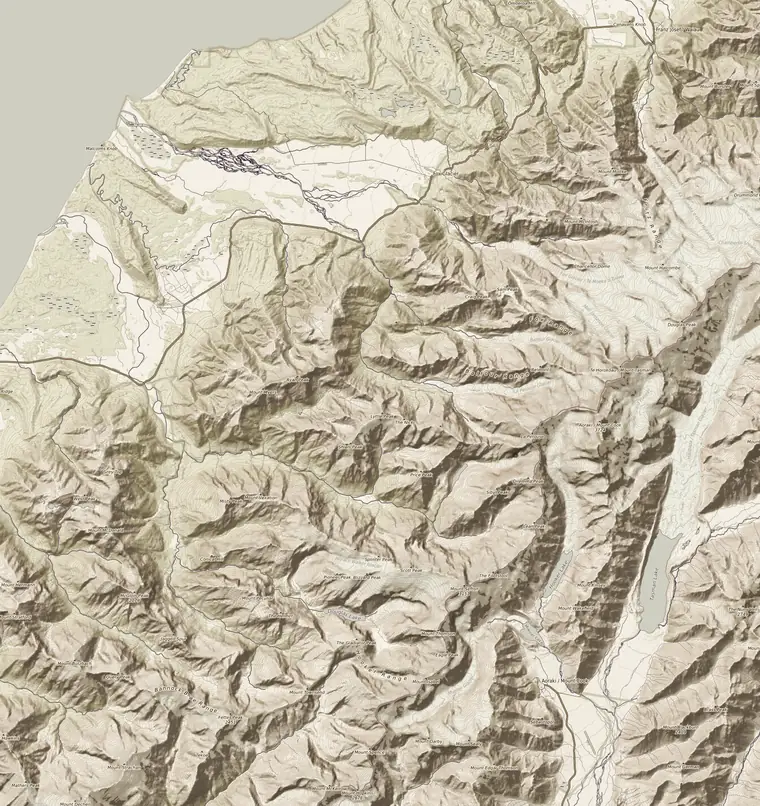
This tripLook at the valleys inland of Fox Glacier and see how much of it is park.

herengaanuku.govt.nz →
Toitū Te Whenua LINZ

Topo50 maps

The official 1:50,000 topographic maps, the ones New Zealand's emergency services use. Free.

This tripStudy the contours around Fox Glacier and you will understand day one before it starts.

linz.govt.nz →
NZ Mountain Safety Council

Alpine hunting

The Council's guide to hunting above the bushline, including the snow and ice skills and avalanche gear a spring hunt needs.

This tripWritten for exactly this kind of hunt. Read it.

mountainsafety.org.nz →
NZ Mountain Safety Council

River safety

When not to cross, and how to cross as a group when you do.

This tripWest Coast rivers rise fast. The Alpine Craft volume has the method.

mountainsafety.org.nz →
Game Animal Council

Hunting in kea habitat

How to hunt in kea country without harming kea: gear, food, camps, and lead in carcasses.

This tripYou will be in kea country every day, and they shred unattended gear.

nzgameanimalcouncil.org.nz →
Department of Conservation

Distress beacons

DOC's page on carrying a beacon, and where to hire one.

This tripThe Westland Tai Poutini National Park Visitor Centre in Franz Josef hires out beacons, on +64 21 947 990.

doc.govt.nz →
MetService

Aoraki/Mount Cook park forecast

The national park forecast next door: winds at 1,000, 2,000 and 3,000 metres, freezing level, hazards and wind chill. There isn't a separate one for Westland Tai Poutini.

This tripThe closest mountain forecast to the hunt.

metservice.com →
MetService

Westland forecast

MetService's forecast for the Westland region, where its feed for the park points.

This tripRead it with the park forecast. The township numbers are not the tops.

metservice.com →
NZ Mountain Safety Council

NZ Avalanche Advisory

New Zealand's official backcountry avalanche forecasts for 13 regions, on a five-level scale, with a confidence rating on each.

This tripThe nearest region to the hunt is Aoraki/Mount Cook.

avalanche.net.nz →
NZ Mountain Safety Council

Hunting incidents

The Council's running record of how hunters get hurt and killed in New Zealand, and what changes the odds.

This tripIts finding that ten of eleven alpine hunting deaths were falls is why the guide is fussy about your route.

mountainsafety.org.nz →
NZ Police

111

New Zealand's emergency number for Police, ambulance and fire. 105 is the non-emergency line.

This tripOnly works where there is signal, and up there there is none.

police.govt.nz →
NZ Police

Calling from a satellite phone

A satellite phone generally can't reach 111. Police answer satellite phone calls on +64 9 571 2800.

This tripWrite the number inside the pack lid.

police.govt.nz →
RCCNZ

Beacons in New Zealand

The Rescue Coordination Centre's beacon site: registration, accidental activation, and visiting with a beacon from home.

This tripA beacon registered in your home country is fine to use while you visit. Set off by accident: leave it on and call RCCNZ on 0508 472 269.

beacons.org.nz →
Accident Compensation Corporation

ACC for visitors

New Zealand's no-fault accident scheme covers treatment for accidental injuries, visitors included.

This tripIt does not cover illness, travel disrupted or cut short, getting home, or treatment once you are back. That is what travel insurance is for.

acc.co.nz →
NZ Police

Will a rescue cost me?

Police say people who are rescued aren't expected to pay, though they may seek costs where there is evidence of recklessness.

This tripNever wait to ask for help because you are worried about a bill.

police.govt.nz →
Department of Conservation

Travelling with a hunting trophy

How to check whether a species needs CITES papers. Tahr and chamois don't, and DOC offers an optional non-CITES letter that reassures foreign border officers.

This tripPrint the letter and keep it with the trophy paperwork.

doc.govt.nz →
Ministry for Primary Industries

Taking home a trophy or hide

MPI's export certificates for trophies and hides leaving New Zealand.

This tripMatters if a raw, salted cape is going to Australia. Organise it before the hunt.

mpi.govt.nz →
Department of Agriculture, Fisheries and Forestry

Bringing in a trophy yourself

Australia's rules for goods you carry in. Trophies must be fully tanned and free of fat, muscle, blood, bone and decay, with skulls and horns boiled and free of soil.

This tripAnything that doesn't meet that is treated, sent back or destroyed, at your cost.

agriculture.gov.au →
Department of Agriculture, Fisheries and Forestry

BICON

Australia's import conditions database, which sets the rules for trophies a taxidermist ships in, including raw capes and hides.

This tripThe rules your taxidermist works to. Have them check it, because it changes.

bicon.agriculture.gov.au →
Australian Border Force

The Incoming Passenger Card

The card you fill in landing in Australia, with a sample of every question.

This tripQuestion 10 asks about farms, farm animals, wilderness or fresh water in the past 30 days. After a park hunt, the answer is yes. Question 8 covers animal products, question 9 soil and gear used in fresh water.

abf.gov.au →
Department of Agriculture, Fisheries and Forestry

Travelling to Australia

What to declare and clean when you come home: food, animal products, and footwear, clothes and gear used in rural areas or near animals.

This tripTick yes, show them your boots, and you will be through quickly. A false declaration can cost up to A$7,280.

agriculture.gov.au →
DCCEEW

Wildlife trade: do I need a permit?

Australia's wildlife trade rules.

This tripNo wildlife trade permit is needed to bring in a non-live specimen of a non-CITES, non-native species, like a tahr or chamois trophy.

dcceew.gov.au →
NZ Deerstalkers' Association

NZDA

The national voice of recreational hunters, founded in 1937, with branches around the country. Keeper of the Douglas Score.

This tripIts articles on tahr hunting, ageing bulls and trophies are the best free reading there is.

deerstalkers.org.nz →
NZ Deerstalkers' Association

The HUNTS course

NZDA's hunter training scheme since 1987: evening sessions and practical weekends, run by branch volunteers.

This tripIf this trip gets under your skin, it is how New Zealanders learn properly.

deerstalkers.org.nz →
NZPHGA

NZ Professional Hunting Guides Association

The guides' own body. Guiding isn't licensed by law in New Zealand, and membership is voluntary, with its own academy and code of ethics.

This tripDOC recommends finding a guided hunt through it.

nzphga.co.nz →
NZ Tahr Foundation

NZ Tahr Foundation

The umbrella group for organisations that hunt and manage tahr, and the other side of the argument with DOC about how many there should be.

This tripRead it next to DOC's tahr pages and make up your own mind.

nztahrfoundation.org.nz →
Game Animal Council

Better Hunting

The Council's free online training site, with modules from field dressing to identification.

This tripGood on the plane, if you load it before you board.

betterhunting.nz →
Te Ara

Te Ara: Hunting

The Encyclopedia of New Zealand's history of hunting, from the first deer releases to the helicopter days.

This tripWhere several of the stories in this library come from.

teara.govt.nz →
III
Before you fly

What paperwork do I need?

Most of the paperwork for this trip is done for you: the permits, passes and tags, the helicopter, the rifles. What is left is yours, and it is short. An Australian citizen has no visa and no NZeTA to sort. Answer five questions and you get your own list, with the links.

It assumes what this trip actually is: a guided hunt with the guide's rifles, five days out of a hut inland of Fox Glacier.

An engraving of a passport, a folded topographic map, a compass, a personal locator beacon, a pencil and an open notebook on a hut table
Plate IThe paperwork that is actually yours: a passport, a map you have studied, a registered beacon, and someone at home who knows the plan.
The pre-flight paperwork check
  • Passport, valid for the whole tripCheck the expiry date tonight, not at the airport.
  • The Traveller Declaration, doneOnline or in the app, from 24 hours before you fly.
  • Travel insurance, read and not just boughtCovering hunting, the backcountry and evacuation. ACC treats injuries in New Zealand and stops there.
  • Boots, gaiters, poles and pack scrubbedNo soil, no seeds, dry, and packed where you can show them.
  • Beacon registration currentIf you're bringing one: AMSA details up to date, trip dates added.
  • Trip intentions left at homePlan My Walk or the Outdoor Intentions Form. Out of contact Thursday to Monday, and when to worry.
  • Medications in their original packetsWith a copy of the prescription for anything unusual.
  • Emergency numbers written down111. Police from a satellite phone: +64 9 571 2800. RCCNZ: 0508 472 269.
  • Coming home: question 10 is a yesOn the Incoming Passenger Card. You have been in wilderness, so say so, and declare the boots.

Already sorted for you

Rifles and ammunition, permits, passes and animal tags, the helicopter both ways, the hut, all the food and every transfer from the airport. You do not need a firearms licence of any kind.

Declare it, every time

Declaring is never a problem. Not declaring is an instant NZ$400 fine in New Zealand, and in Australia a false declaration can cost up to A$7,280. If you are not sure, tick yes and ask.

IV
Firearms

A rifle in New Zealand

New Zealand rewrote its firearms law this year. The Arms Act 2026 replaced the Arms Act 1983, with most of it in force from 23 September 2026, and a new regulator came with it: Firearms Safety and Education New Zealand, which took over from Te Tari Pūreke, the Firearms Safety Authority. Police still enforce the law. Some older pages, DOC's among them, still mention the 1983 Act while they catch up.

For this trip the part that matters is short. Under section 14 a person needs a licence to possess a standard firearm, and under section 16 it is a defence that they were under the immediate supervision of a firearms licence holder the whole time. The regulator puts it plainly: standard firearms can be used under the immediate supervision of a licence holder in most circumstances.

23SepArms Act 2026 in force
4monthsLead time for a visitor licence, if you ever need one
The shooter The guide licence holder within reach
Fig. 2Immediate supervision: there, watching, within reach of the rifle, and not shooting another one.
What it means on the hill
  1. The guide is right there

    Physically present and actively supervising, not watching from the next spur.

  2. Within reach of the rifle

    Close enough to take control of it if needed. Nobody walks off alone with a rifle, not even to the next gully.

  3. One rifle working

    While the guide supervises you, he isn't using a firearm of his own. One rifle in play at a time.

  4. The rounds and the silencer too

    Under sections 27 and 30 you can hold ammunition, and parts like the silencer, only while under that same supervision.

Which rules apply to you
This trip

No New Zealand licence needed

You shoot the guide's rifle under his immediate supervision. You still need your own DOC hunting permit, which is sorted for you, and you follow the guide's rules and the seven below. That is the whole of it.

The seven rules
1

Treat every firearm as loaded

Every time, including the one you just watched someone unload.

2

Always point firearms in a safe direction

On a steep face that includes downhill, where your mates are.

3

Chamber a cartridge only when ready to fire

Rounds in the magazine for the stalk, one in the chamber at the end of it.

4

Identify your target beyond all doubt

Seen whole, through the glass. Never a shape, a colour or a movement.

5

Check your firing zone

What is behind it, and beyond that. On a skyline, the answer is nothing you can see.

6

Store and transport firearms and ammunition safely

In a hut, DOC asks for the bolt out or a trigger lock, rounds kept apart, the rifle bagged and out of sight.

7

Avoid alcohol or drugs when handling firearms

The rifles and the drinking never overlap. Same as the weekend.

The rulesAs Firearms Safety and Education NZ states them. The notes under each are ours.

V
Land

Permits and the park

To hunt on any land in New Zealand you need the owner's permission. On public conservation land that permission is a DOC hunting permit, and every person in the party who intends to hunt needs their own, including anyone shooting under someone else's supervision. The open area permit is free, lasts twelve months, and covers ground hunting of deer, pigs, goats, wallabies, chamois and tahr.

The hunt is in Westland Tai Poutini National Park, which runs from the highest peaks of the Southern Alps down to the coast and is part of the Te Wāhipounamu World Heritage Area. National parks carry extra rules: the National Parks Act makes carrying or firing a firearm in a park an offence without authority, which the permit gives you, there are no dogs at all, and aircraft land only where the park plan and an operator's permissions allow.

A topographic map of the West Coast around Fox Glacier, from the Tasman Sea to the Main Divide
Plate IIFox Glacier and the Main Divide. Map data © OpenStreetMap contributors, SRTM. Map style © OpenTopoMap (CC BY-SA).
What the permit says
Darkness
No loaded firearm and no shooting from half an hour after sunset to half an hour before sunrise. No spotlights, torches or night vision, and nothing fitted to the rifle that sees in the dark.
Thermal
Hand-held thermal binoculars and monoculars are allowed for finding animals, in daylight only.
Calibre
Centre-fire rifles of .222 Remington or larger. No shotguns, rimfires, .17s, .22 Hornet, air rifles or tracer.
Where not to shoot
Not near huts, tracks, campsites, road ends or anywhere the public is, and never in a way that endangers or frightens anyone.
Carcasses
Never left within 100 metres of a hut or campsite, or 50 metres of a track or waterway.
Showing it
Your permit is yours alone, and you produce it on demand to a warranted officer, a DOC staff member or a police officer. A copy on your phone is fine.
The park, specifically
Where can't you hunt near Fox Glacier?

DOC's special conditions rule out hunting within 500 metres of the Fox Glacier Southside Walkway and Cycleway and the Te Weheka Walkway and Cycleway, and in the Fox and Franz Josef glacier valleys below the 500 metre contour. The guide knows the boundaries of the block you are in.

Why is DOC shooting tahr in the park?

The National Parks Act 1980 requires introduced animals in national parks to be exterminated as far as possible, and the Himalayan Thar Control Plan 1993 aims the two national parks towards none. DOC's control teams target every tahr in the parks, bulls included, and its aerial control season runs until 13 November 2026, so you may hear its helicopters. Elsewhere it spares identifiable bulls.

Can you hunt from the helicopter?

Flying in and then hunting on foot is allowed all year. Hunting with a helicopter, searching for animals from the air, is a different thing that needs its own DOC concession, and it isn't what this trip is.

How many tahr are there?

DOC's 2023 survey put it at about 29,800 on public conservation land inside the management units, against the plan's cap of 10,000 across all land. Hunters and DOC argue about those numbers, and the NZ Tahr Foundation took DOC to the High Court in 2020 over how it consulted. Read both sides.

What about the hut?

DOC huts run on hut tickets and trust, and there is a hut book: write in it. With a rifle in a hut, DOC asks you to take the bolt out or fit a trigger lock, keep the ammunition apart, keep the rifle bagged and out of sight, and tell the other people there.

Lore

The plan that governs every tahr in New Zealand spells it thar: the Himalayan Thar Control Plan, 1993. It was set up as an experiment for an initial five years. Thirty-three years on it is still the rulebook. The Game Animal Council says it is overdue for review, and nobody agrees on what a new one should say.

Look at the ground yourself

Herenga ā Nuku's access maps show public conservation land, the parks, tracks and huts. LINZ's free Topo50 maps show the contours. Half an hour with both and the country stops being a blank.

VI
Emergencies

When it goes wrong

There is no phone reception where you are going. That changes the emergency plan from "ring someone" to "have a way to call for help that doesn't need a phone tower", and every person in the party should know what it is, where it is, and how to use it.

The good news: people who are rescued in New Zealand aren't expected to pay, and a beacon registered in Australia works there. The bad news is the same as everywhere in the mountains. Helicopters don't fly at night or in cloud, so help can be hours away even after it has been called.

111Emergency, from any phone with signal
$0What a rescue costs you, unless you were reckless
RCCNZ 1 Beacon 2 Satellite 3 Groundstation 4 Rescuecentre 5 Helicopter
Fig. 3How a 406 MHz beacon alert travels. For an Australian beacon, AMSA hands RCCNZ your registration details.
Who to call, with what

Dial 111

Police, ambulance and fire. No credit needed. Messaging apps that call over data can't reach 111. Some newer phones can text emergency services by satellite where there is no signal, but don't plan around it.

Questions people ask
Can I use my Australian beacon in New Zealand?

Yes. RCCNZ says a foreign-coded beacon can be used while you visit, as long as it is registered in your home country and your contacts know your plans. RCCNZ can't register an Australian-coded beacon, and you don't need it to.

Does ACC cover me?

ACC covers treatment in New Zealand for accidental injuries, visitors included. It doesn't cover illness, disrupted travel, getting you home, or treatment once you are back in Australia. That is what travel insurance is for, so check yours covers hunting and evacuation.

Who actually comes?

Usually a rescue helicopter, sent by RCCNZ for a beacon or by Police for a search on land. In cloud, wind or darkness it may not be able to fly, which is why the party carries enough to get through a night.

Can I hire a beacon there?

Yes. DOC's Westland Tai Poutini National Park Visitor Centre in Franz Josef hires them out. Call +64 21 947 990 to book one.

What do I tell them?

What happened, where you are (a grid reference or GPS position), who you are and how to reach you, the weather, the injuries, and what you have with you.

VII
Trophies and the border

Getting it home

Two borders, both strict about the same thing: dirt, seeds and anything that has been near an animal. New Zealand's going in, Australia's coming home. Neither has a problem with you, your boots or a properly prepared trophy, provided you clean it and declare it.

Tahr and chamois are not CITES-listed, so no CITES papers are needed to take them out of New Zealand or bring them into Australia, and Australia's wildlife trade rules need no permit for a non-live, non-native, non-CITES trophy. The rules that bite are biosecurity ones, and on this trip capes and skulls go to a taxidermist to be prepared for the trip home.

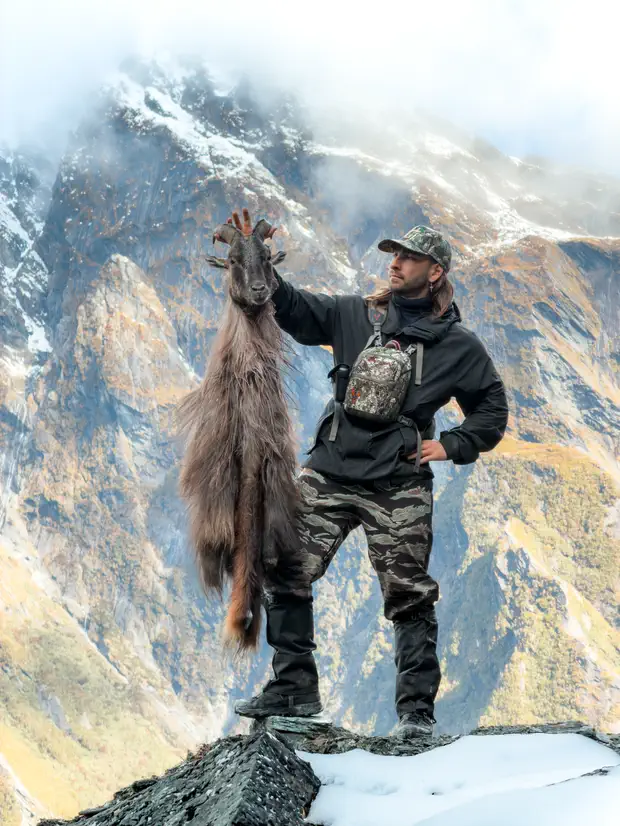
A hunter on a snowy ridge holding up a caped bull tahr
Plate IIIA cape on the ridge. From here it is paperwork, salt and patience.
Three ways a trophy comes home
i

Mounted in New Zealand

A New Zealand taxidermist mounts it and ships it. Australia lets a finished trophy in if it is fully tanned and free of fat, muscle, blood, bone and decay, with the skull and horns boiled. It is inspected on arrival. It won't be ready for your flight home.

ii

Raw cape to a taxidermist at home

The cape salted and the skull boiled out, then sent to a taxidermist in Australia under BICON's conditions, which for a raw hide involve a New Zealand government export certificate from MPI, issued after the hunt. Talk to MPI and your taxidermist before you go.

iii

A clean skull in your bag

Horns and a skull that are boiled and free of soil and tissue can come home in your luggage, declared and inspected, with inspection fees to pay. Dirt, tissue or an unboiled skull is how it gets taken off you.

Through both borders
  1. Before you fly

    Scrub the gear

    Boots, gaiters, poles, pack and tent clean of soil and seeds, and dry. Do the Traveller Declaration from 24 hours out.

  2. Landing in New Zealand

    Declare it

    Yes to outdoor gear on the declaration, and show it when asked. Biosecurity looks, sometimes cleans or treats it, and waves you through.

  3. After the hunt

    Trophy to the taxidermist

    Capes and skulls go to the taxidermist to be prepared for the trip home, with DOC's non-CITES letter and any MPI certificate.

  4. Landing in Australia

    Declare it again

    Question 8 for animal products, 9 for gear used in fresh water, and 10 for wilderness: yes, yes and yes. Clean gear goes through quickly.

Lore

Franz Josef Glacier, just up the road from Fox, is named after the Austrian emperor Franz Joseph. In 1907 the same emperor sent New Zealand its first chamois from his own hunting grounds, part of an exchange that sent kea and kiwi the other way. A chamois cape heading home in your luggage is, in a sense, carrying on the family business.

Try the field game →