Camp Kitchen
There’s no recording of this volume, so your phone reads it out, section by section.
Venison over coals. Heart, backstrap, and the recipes that earn their place.

Fire and coals
Most bad camp cooking starts the same way: somebody gets hungry and puts the meat on while the fire is still a fire. Flames are uneven and dirty. They lick one side of the meat and miss the other, coat it in soot, and every drop of fat that hits them comes straight back up as a flare.
What you want is underneath. A bed of coals glowing orange under a thin coat of white ash, with no flame worth mentioning, gives off steady radiant heat across the whole bed. That is what browns meat evenly. Getting there with dry hardwood takes longer than anyone wants, so light the fire before you start anything else.
Never cook over treated timber or painted offcuts. Treated pine is preserved with copper, chromium and arsenic, and arsenic poisoning has been reported from breathing the smoke of it.
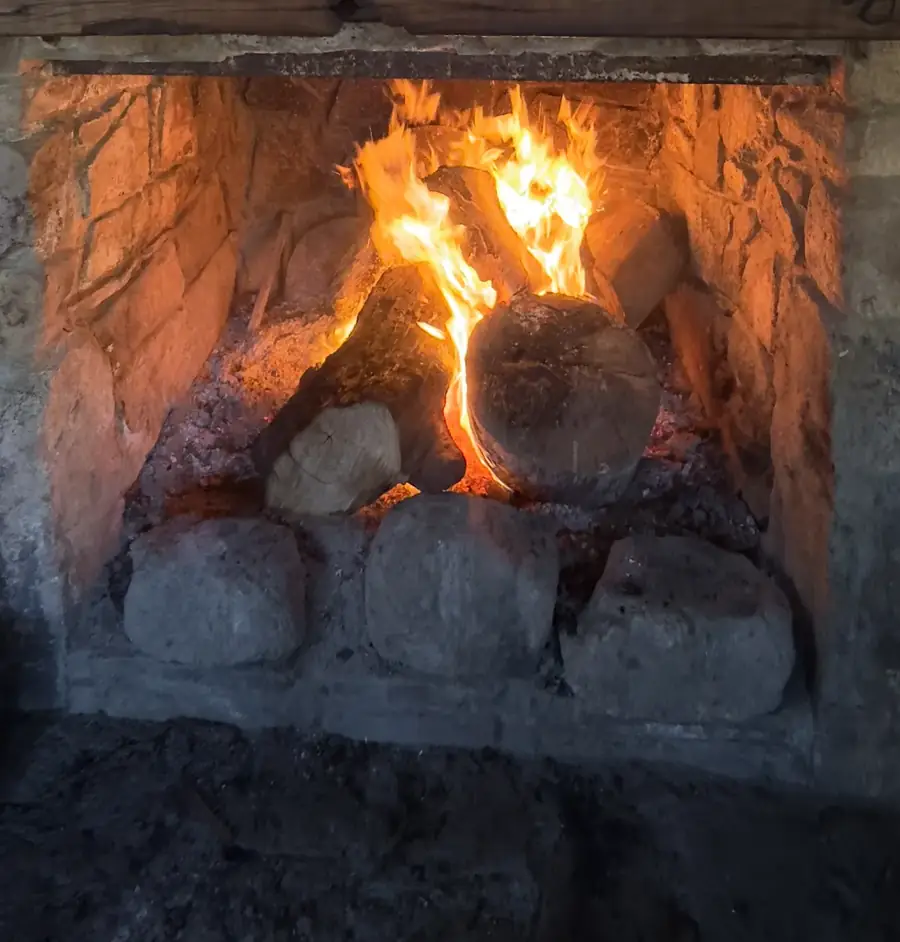
The cook's oldest thermometer is the back of your hand. Hold it flat, palm down, about 13 to 15 cm above the grill, and count how long you can leave it there. The charcoal makers publish the scale: two to four seconds is high heat, five or six is medium, eight to ten is low. Pull your hand away the moment it is uncomfortable. The count tells you the heat. Toughing it out tells you nothing.
Sear here.
A rough tool, and good enough
Hands differ, wind differs, and the scale comes from charcoal grills rather than a hardwood bed. It still tells hot from medium from low, which is all you need from it. If you own a probe thermometer, bring it: it is the one piece of kitchen kit that earns its place in a camp box.
Rake the coals into a deep bed on one side and leave the other side of the grill bare. Now you have a hot zone to sear and a cool zone with nothing underneath. A backstrap gets its crust over the coals, then moves across to finish gently, with no risk of burning the outside while the middle catches up.
It is also your escape route. When fat flares, slide the meat to the cool side until the flames die. Charcoal makers give the same advice, and warn against a squirt of water, which throws ash up onto the food. The slope of thinner coals between the two gives you medium heat for things that must cook through without charring, like burgers and sausages.
Cast iron earns its weight at camp. It is a poor conductor, so it heats unevenly if you rush it, but once it is hot it stores a lot of heat and keeps cooking after it leaves the coals. Put a cold backstrap in a thin pan and the pan's temperature collapses and the meat stews. Put it in properly hot cast iron and it sears. Heat the pan slowly over the coals and it heats evenly.
A camp oven is a cast-iron pot with legs and a flat lid with a raised lip, so it can stand over a bed of coals with more coals sitting on top. Rake the bed out to one side of the fire rather than putting the oven in the flames. Baking wants more heat on the lid than underneath, or the bottom burns before the top is done. A stew wants the opposite: a modest bed underneath and a few on the lid, enough for a lazy bubble. Cast-iron makers publish coal charts for their ovens. With wood coals you judge it by eye, lift the lid now and then, and add or rake away coals.
Afterwards, scrape it out and wash it with hot water and a little mild detergent. Dry it completely, then, while it is still warm, rub in a very thin film of oil and wipe it back until it barely shows. Never leave it soaking, which is how cast iron rusts, and store it with the lid ajar so moisture cannot collect inside.
Lore
The browning that makes a seared backstrap taste better than a boiled one has a name. In 1912 the French chemist Louis Camille Maillard described the reaction between amino acids and sugars that produces it, while he was trying to work out how living things build proteins. It runs fast from about 140°C. That is why wet meat goes grey instead of brown: while there is water on the surface, the surface cannot get much past 100°C.
The hunter's first meal
There is an old habit, older than any recipe book, of eating the best of the animal first. The backstrap is the most tender cut on a deer, and on the night it comes off it needs nothing but salt, heat and a few minutes' rest. The heart and the liver are the other two that belong to that night. Both are best fresh, and both are wasted by overcooking.
One thing to know about timing. Muscle stiffens as rigor sets in, and meat is at its toughest about a day after the animal dies, then softens as it ages. Cooked very soon after the kill, before the muscle stiffens, a backstrap is tender. One cooked the next morning can fight back, so slice it thin, across the grain, and it is still good.
A deer's heart is a dense, fine-grained muscle that eats like a good steak, and it is lean. Trim it properly and nobody at the fire will guess what it is. The cap of hard white fat comes off, so do the big vessels at the top, and so do the valves and the stringy cords inside. Then open it out flat, or slice it into steaks a finger thick.
Cook it hot and fast and take it off while it is pink, because overcooked heart turns to rubber. Be clear about what that means. Officially heart counts as offal, and offal is cooked to 75°C. Pink heart is below that line. Plenty of hunters choose it anyway, and it should be a choice, not an accident.
Tap or hover the parts of the heart
Where to open it
Run the knife down one side from the top to the point and open the heart out like a book. Now you can see everything that has to come out, and the meat lies flat for the pan.
The fat cap
Hard white fat around the top. Deer fat is highly saturated and sets waxy on the plate as it cools, so trim it off.
The vessels
The big tubes at the top are tough and rubbery. Cut them off flush with the muscle.
Valves and cords
The thin flaps and the stringy white cords inside the chambers. Pull and cut them out. Left in, they are the bits that make people think they do not like heart.
The muscle wall
This is the meat: dense, dark red and lean. Slice it into steaks about 1.5 cm thick, or cook it whole and opened flat, hot and fast.
Liver rewards speed and punishes everything else. Look at it before you keep it. A good liver is smooth, glossy and evenly coloured, with clean edges. White spots, lumps, abscesses, fluid-filled cysts, flat leaf-shaped worms in the ducts, or anything that smells wrong, and it goes. Bag it, get it cold and cook it soon.
To cook it, peel off any thin membrane, slice it about a centimetre thick, pat it dry and give it a minute or two a side in a hot pan with butter or bacon fat. Liver goes from soft and pink to grey and grainy in about a minute, and grainy liver is bitter. Officially, offal is cooked to 75°C with no pink. Many cooks leave liver just pink. That is below the line, and you should know it is.
Some cooks soak liver in milk or lemony water first. It may soften the flavour of thin slices. No soak fixes a liver from a badly handled animal.
Keep it
Smooth and glossy, one even colour all through, firm, sharp edges, clean smell.
Bin it
White spots, cysts or abscesses, lumpy or swollen, worms in the ducts, odd colour, or a smell you do not like. When in doubt, it goes.
The kidneys
Victoria's game meat guide advises throwing them out, because leptospirosis is shed in urine. Treat that as your call, and cook them through if you keep them.
Lore
The heart, liver and the rest of a deer's insides were once called the umbles, and they were reckoned poor people's food. Baked in a pie they made "umble pie". By about 1830, helped along by a pun and an English that dropped its h's, the dish had become the phrase humble pie. Whoever ends up eating it at your fire is doing better than the medieval version.
Recipes that earn their place
Every cut on a deer falls into one of two families. The muscles that do little work, the backstrap, the tenderloin and the big muscles of the hindquarter, are tender and lean, and they want fast and hot. The muscles that work all day, the neck, the shoulder and the shanks, are full of connective tissue, and they want low and slow, wet and covered, for hours. What ruins venison is the middle ground: a working cut cooked fast, or a tender cut cooked slowly until it is grey.
Venison is also lean. Premium venison mince runs at about 3 g of fat per 100 g, and kangaroo fillet at about 1 g. There is no marbling to forgive you. Past medium, a fast cut dries out with nothing to soften it.
Tap the animal to see which family each cut belongs to
Backstrap: fast and hot
The prize. Sear it whole and pull it early. See the first recipe. The tenderloin, inside the body cavity under the spine, is smaller still and treated the same.
Hindquarter: fast, or a roast
Rump, topside, silverside and knuckle. Steaks cut across the grain, a hot roast kept pink, or thin slices for a marinade and the grill.
Neck: low and slow
A hard-working muscle, and one of the best eating once it has had four or five hours in a camp oven. Bone in.
Shoulder: low and slow
Braise it on the bone, or dice it for a stew or a pie. Leave the silverskin on: hours of wet heat turn it to gelatin.
Shanks: low and slow
Four of them per animal, and the reason people own camp ovens. Three to four hours until the meat falls off the bone.
Ribs and flank: mince
Thin, sinewy meat. Into the mincer with added fat for burgers and sausages, or braise the ribs slowly.
Eight that earn their place. None needs anything that will not fit in a camp box, quantities feed about four, and the ingredient lists tick off as you pack. They remember on this device.
Backstrap, butter-basted
The one everybody waits for. Sear it whole, baste it, pull it early, rest it, slice it across. It needs nothing else.
- 1 backstrap, 600–800 gsilverskin trimmed off
- Salt and cracked pepper
- 1 tbsp oilone that takes high heat
- 40 g butter
- 3 garlic clovescrushed, skins on
- A few sprigs of rosemary or thyme
- A probe thermometer
- Out of the esky 20 minutes before cooking. Pat it dry and salt it all over. Dry meat browns, wet meat steams.
- Get a cast-iron pan smoking hot over the deep coals, or put the meat straight on the grill over them. That is a two-second hand.
- Oil the meat, not the pan. Sear about 2 minutes a side, turning to brown all four sides.
- Slide the pan to the cooler edge. In go the butter, garlic and herbs. Tilt the pan and spoon the foaming butter over the meat for a minute or two.
- Check the thickest part. Pull it at about 52°C for medium-rare, or about 60°C if you want the official 63°C after the rest.
- Rest 5 to 10 minutes, loosely covered. Slice across the grain, a centimetre thick, and pour the pan butter over.
Off the heat for medium-rare, finishing about 55°C after the rest. The official line for whole cuts is 63°C plus a rest, which the NSW Food Authority's table calls medium-rare and most cooks would call medium. If you are pregnant or your immune system is down, cook it to 63°C.
Heart, seared and sliced thin
The cut that converts people. Trimmed hard, cooked fast, sliced thin, with lemon at the end.
- 1 deer hearttrimmed: fat, vessels, valves and cords off
- 2 tbsp oil
- 2 garlic cloves, crushed
- Salt and cracked pepper
- Half a lemon
- Chilli flakesif you like
- Open the heart out flat and trim away everything that is not dark red muscle.
- Cut it into steaks about 1.5 cm thick.
- Toss them in the oil, garlic, salt, pepper and chilli.
- On the hottest part of the fire or in a smoking pan, 60 to 90 seconds a side.
- Rest 2 minutes, slice thin across the grain, and squeeze the lemon over.
The official line for heart, which is offal. Cooks who love it take it off pink, at medium-rare, because past medium it toughens. Pink is below the line.
Liver and onions
Slow onions, fast liver. The onions take the time. The liver takes about three minutes, and every second past that costs you.
- 1 fresh liverinspected, membrane off, sliced 1 cm thick
- 2 onions, sliced into rings
- 3 tbsp butter or bacon fat
- 4 rashers of baconoptional, and worth it
- 2 tbsp plain flour, seasoned with salt and pepper
- Cook the bacon first if you have it, then the onions in the fat over gentle heat, 10 to 15 minutes until soft and golden. Set them aside.
- Pat the liver dry and dust it in the seasoned flour.
- Turn the heat right up. Fry the liver 1 to 2 minutes a side, a few slices at a time so the pan stays hot.
- Off the heat the moment it is done the way you want it. Pile the onions and bacon back on top.
The official line for liver: cooked through, no pink. Plenty of cooks stop at just pink, because past that it goes grainy and bitter. That is below the line.
Camp oven shanks, or a neck
Brown it, build a sauce, put the lid on and walk away. The coals do the work, and the meat comes off the bone with a spoon.
- 4 shanks, or a neck in 2 or 3 piecesbone in
- 2 tbsp plain flour, seasoned
- 3 tbsp oil
- 2 onions and 2 carrots, chopped
- 4 garlic cloves, sliced
- 2 tbsp tomato paste
- 1 tin of tomatoes, 400 g
- 750 ml stockplus more for topping up
- 2 bay leaves and a few sprigs of thyme
- 1 tbsp Worcestershire sauce or balsamic vinegar
- Stand the camp oven over a bed of coals raked out of the fire. Dust the meat in the flour and brown it well in the oil, a couple of pieces at a time. Lift it out.
- Soften the onion and carrot for 5 minutes, add the garlic for a minute, then the tomato paste for another, scraping the bottom.
- Add the tomatoes, stock, herbs and Worcestershire, and put the meat back. The liquid should come about halfway up.
- Lid on. A modest bed underneath and a few coals on the lid, enough for a lazy bubble, not a boil.
- Check every 45 minutes. Turn the meat, top up the liquid if it is drying, and feed fresh coals from the fire.
- Done when the meat falls away from the bone: about 3 to 4 hours for shanks, 4 to 5 for a neck. Skim the fat, taste for salt, serve with mash or damper.
It will be far past any safety line. Tenderness is the test: the connective tissue only melts into gelatin after hours of gentle, wet heat.
Venison burgers, with the fat put back
Venison mince on its own falls apart and eats dry. The fix is fat, about a fifth of the mix, and pork does it best.
- 800 g venison mince
- 200 g pork back fat or fatty pork mince20% of the mix
- 1 tsp salt and 1 tsp cracked pepper
- 1 small onion, gratedoptional
- 6 buns, cheese, lettuce, tomato, beetroot, sauce
- Keep the meat and fat cold. Mix them by hand until just combined. Overworked mince turns dense.
- Shape 6 patties about 2 cm thick, a little wider than the buns, with a shallow dimple pressed in the middle so they cook flat.
- Salt and pepper the outside just before they go on.
- Medium heat, a five-second hand. About 4 to 5 minutes a side, flipped once. Do not press them: that squeezes the fat out.
- Probe the middle. 75°C, and no pink.
- Rest 2 minutes, then build them. Beetroot is not optional.
Every time. That is the Food Safety Information Council's number, and the NSW Food Authority's is 71°C. Mincing carries the bacteria from the surface right through the meat, so mince is never served rare. For rissoles, add an egg and a handful of breadcrumbs and cook them through the same way.
Roo fillet: lean, rare, rested
The leanest red meat you will ever cook, at about 1% fat. Cooked hard and fast and sliced thin, it is excellent. Cooked past medium, it turns dry and livery, and nothing saves it.
- 2 kangaroo loin fillets
- 1 tbsp oil
- Salt
- Cracked pepperor crushed native pepperberry, if you have it
- Pat the fillets dry. Rub with the oil, salt and pepper.
- Very hot grill or pan. Sear 1 to 2 minutes a side, depending on thickness, turning to brown all over.
- Pull at about 50 to 52°C for rare, or 60°C for the official line after resting.
- Rest it about as long as it cooked. Slice thin across the grain.
Australian marsupials, kangaroos included, are considered highly susceptible to toxoplasmosis, a parasite spread by feral cats, and its cysts can sit in muscle. Rare roo is below the official 63°C. Most cooks accept that. Anyone pregnant or immune-compromised should not: cook it to 63°C. Freezing for several days lowers the risk without removing it.
A marinade for the working cuts
For topside, silverside, flank and the steaks off an old buck. The marinade brings flavour. The tenderising is done by the knife: thin, across the grain.
- 800 g of a working cut
- 125 ml olive oil
- 60 ml soy sauce
- 60 ml red wine vinegar or balsamic
- 1 tbsp brown sugar or honey
- 4 garlic cloves, crushed
- 1 tsp cracked pepper and some chopped rosemary
- A zip-lock bag
- Mix everything except the meat. Set a few spoonfuls aside now if you want some for basting or a sauce later.
- Slice the meat 5 mm thick across the grain, or cut it into 3 cm cubes for skewers.
- Into the bag, air pressed out, into the esky for 4 to 12 hours. Never on the bench.
- Lift the meat out and pat it dry. Wet meat steams instead of browning.
- Thin slices: very hot, under a minute a side. Skewers: medium heat, turned often.
- Throw out the used marinade. Raw meat has been in it.
For skewers and anything marinated, the Australian advice is 75°C in the middle, because piercing and marinating can carry surface bacteria inside. Only the salt in a marinade gets in very far. Keep pineapple, papaya and kiwi out: their enzymes turn the surface to mush within about half an hour.
Hut night: backstrap and couscous
Built for a gas burner at altitude. Couscous only needs boiling water, so it costs far less gas than pasta or rice, and it holds its heat while the meat cooks.
- A backstrap, or any tender cutin 2 cm medallions
- 2 cups couscous
- 2 stock cubes
- About 2½ cups of water
- 40 g butter and 2 garlic cloves
- Salt, pepper, dried thyme
- Dried cranberries and nutsif the pack has any left
- Boil the water with the lid on. It gets there faster and saves gas.
- Pour it over the couscous and crumbled stock cubes, lid on, and wrap the pot in a jacket. It cooks itself in about 5 minutes and stays hot.
- Sear the medallions in a hot pan, 1 to 2 minutes a side. Add the butter, garlic and thyme and baste for a minute.
- Rest the meat on top of the couscous, so the juices run into it.
- Fork the fruit and nuts through, pour the pan butter over the lot, and eat it out of the pot.
Off the heat for medium-rare, as with any backstrap, or about 60°C for the official line. Up high, pasta and rice take longer than at home, which is the other reason for couscous.
Lore
Venison did not always mean deer. The word came into English through the Old French venesoun, from the Latin venatio, hunting, and it once meant the meat of any large game animal brought home from the chase. The boar and the hare were venison too. Only later did it narrow to the meat of deer.
Rest it, then slice it
The meat is cooked. Now leave it alone. When it comes off the heat, the outside is far hotter than the middle, and that heat keeps moving inward after the meat leaves the fire. That is carryover, and it is why you pull a backstrap three to five degrees before the number you want. A big roast can climb more than ten.
The second reason people give for resting is the juice. Cut a steak straight off the fire and more runs out onto the board. Cut it after a few minutes and less does. Cooks still argue about how much that matters. Nobody argues about the carryover.
Rest a backstrap or steaks 5 to 10 minutes, longer for a roast, loosely covered on a warm plate. Do not wrap it tight in foil, or the steam softens the crust you worked for.
52°C in the middle, and still going up
The outer centimetre is far hotter than the core, and that heat is still travelling in. Cut it now and the middle is underdone and the board runs red.
Climbing
The pink band is closing in on the centre and less juice runs when you cut.
The peak: about 56°C
Medium-rare, right through. This is when you slice.
Cooling, slowly
Still good, still warm. Leave it too long and it goes cold, so time the rest to the plates.
Muscle is made of long fibres bundled together like rope. Cut along them and every bite is a length of rope to chew. Cut across them and every bite is a stack of short ends that come apart in your teeth. That is all "against the grain" means.
Find the grain by looking at the cut face for the lines. On a backstrap they run the length of it, so you slice it into rounds. On a rump or a topside they change direction from one muscle to the next, so turn the piece as you go. For a tough cut, thin slices across the grain do more good than any marinade.
Lore
For more than a century cooks were told that searing "seals in the juices". The idea came from the German chemist Justus von Liebig around 1850. Experiments from the 1930s on found seared roasts lost as much moisture as unseared ones, or more. Sear for the crust and the flavour. The juice is not locked in anywhere.
Food safety at camp
Food poisoning at camp is not a mystery. Bacteria multiply between 5°C and 60°C, and the whole job is three things: keep raw meat out of that range, keep it away from anything that will not be cooked, and keep it off your hands. It is the same job at Silent Grove and in a hut on the West Coast.
Food Standards Australia New Zealand gives a simple rule for cooked or ready-to-eat food that should be kept cold. Under two hours out between 5 and 60°C, use it or put it back in the cold. Two to four hours, use it now and never put it back. Over four hours, throw it out. The clock adds up every time it comes out.
The esky is the cold room you carry. Pack it with frozen bricks, gel packs or frozen bottles around the food, and only use loose ice if the meat is in sealed bags or containers. Meat sits on the ice, not swimming in meltwater, so drain it often. Raw meat goes at the bottom, below anything ready to eat.
Get the esky out of the car and into the shade the moment you arrive. A wet hessian bag over it cools it by evaporation. Give the drinks their own esky, because it gets opened all day and every opening lets the cold out.
Meat, bagged, on the ice
Sealed bags or containers, sitting on the ice rather than in meltwater, at the bottom where raw juices cannot drip onto anything ready to eat.
Frozen bricks
Frozen bricks, gel packs or frozen bottles packed around the food. Loose ice only when the food is in waterproof bags or containers.
Drain the meltwater
Meltwater warms up and carries juice from one bag to the next. Drain it often.
Keep the lid shut
Every opening lets the cold out. A wet hessian bag over the top keeps it cooler, by evaporation.
A thermometer inside
A cheap fridge thermometer tells you more than a hand on the lid. You want 5°C or below.
A separate drinks esky
The one that gets opened every ten minutes. Keeping it separate keeps the meat esky shut.
Shade, straight away
Out of the car and into the shade the moment you arrive, and moved as the sun moves.
Raw meat, and everything it has touched, never meets food that will not be cooked again. That means a board and knife kept for raw meat, ideally plastic, because wood is porous. The plate that carried the meat to the fire does not carry it back. Wash it, or bring a clean one. Tongs for raw, tongs for cooked. Everything that touched raw meat gets hot water and detergent, then dried, before it goes near anything else.
Wash with soap and running water, then dry them. A jerry can with a tap, a cake of soap and a towel on a nail makes a camp handbasin. Sanitiser is fine on clean hands, but the American health authority, the CDC, says it may not work as well when hands are visibly dirty or greasy, and after a gralloch they always are. Wear gloves for the gutting and the butchery, and cover cuts and grazes.
Wild animals carry diseases people can catch. NSW Health lists hunters among the people at risk of Q fever, which kangaroos and goats can carry, and a vaccine exists for people at risk. Field to Freezer covers the diseases properly.
- Hands washed with soap and running waterand dried
- A board and knife kept for raw meat
- A clean plate waiting for the cooked meat
- Separate tongs for raw and cooked
- Thermometer in your pocket
- Esky shut, in the shade, under 5°C
- Used marinade binned
- Gloves on for the gutting and butcherycuts and grazes covered
Lore
Nobody is quite sure where the billy got its name. The favourite story is the old bouilli tins, cans of preserved soup and boiled beef whose empties made good pots on the goldfields. Another links it to billa, said to be an Aboriginal word for water, as in billabong. "Boiling the billy" for tea goes back to the gold rushes at least.
Cooking up high
The New Zealand hut is a different kitchen. There is no power and nothing plugs in. The food rides in on the helicopter, so the food box is sorted before you land and the weight on your back is your own gear. The food that matters most is in your day pack, because that is what gets you up the hill.
Carry food that is dense, needs no cooking and does not mind being squashed or frozen: nuts, cheese, salami, chocolate, muesli bars, dried fruit, wraps. Eat a bit every hour or so rather than one big lunch, because it is easier to keep climbing on. Drink even when you are not thirsty. In the cold it is easy to forget.
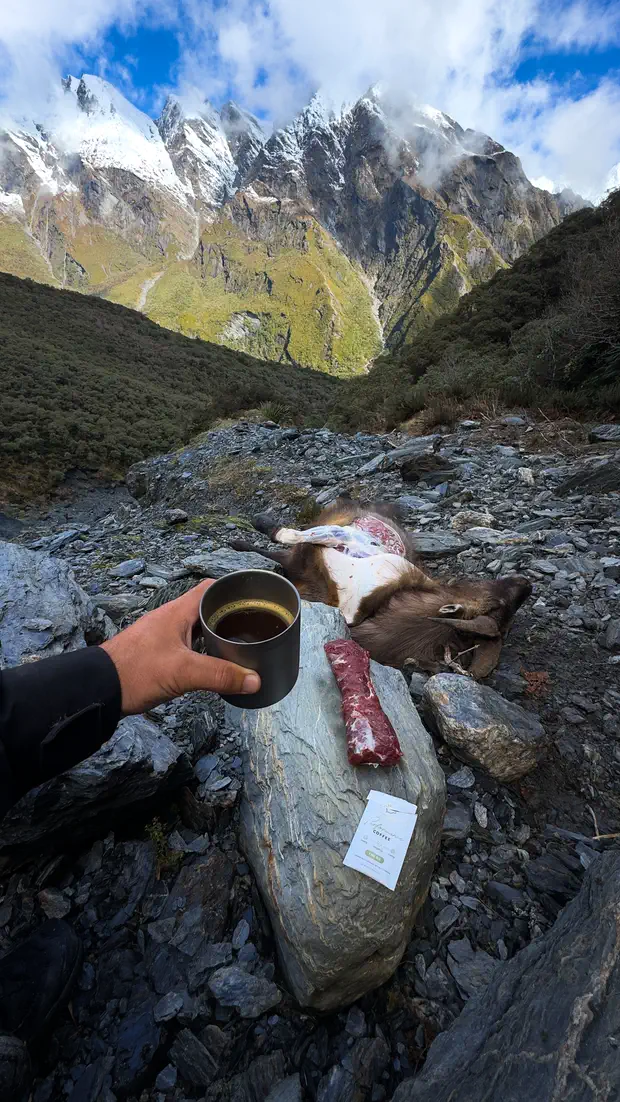
Water boils at 100°C only at sea level. Climb, and the weight of air pressing on the water falls, so it boils cooler, by roughly a degree for every 300 m. At 1,000 m it boils at about 96.7°C, and at 1,500 m at about 95°C. A deep low coming in off the Tasman drops it a fraction further.
A boil is still a boil. The water up there is about as clean as water gets, and if you ever need to make doubtful water safe, the CDC's rule is a rolling boil for one minute, or three above about 2,000 m. That covers every height on this trip. What changes is cooking. Pasta, rice and anything simmered take longer, because the water never gets as hot. Couscous, instant noodles and anything that only wants hot water are your friends.
Boiling point on a standard day. 728 m is the hut at Silent Grove. The bars start at 90°C.
Cooking at a backcountry hut usually means gas, from a bottle or a screw-on canister. A canister is a blend of butane, isobutane and propane, and each one only turns from liquid to gas above its own boiling point. Butane gives up at about 0°C, isobutane keeps going to about −12°C, and propane to −42°C. A cheap canister heavy in butane, left outside on a frosty night, will barely sputter in the morning.
Keep it warm: inside your jacket before you cook, and in your sleeping bag overnight. A windshield around the pot saves a lot of gas. Never run a stove inside a tent, and keep a door or window open in a hut while the gas is going: burning gas makes carbon monoxide, and you cannot smell it.
Coffee up there is a ritual as much as a drink, and the mountain helps. Coffee is usually brewed with water just off the boil, in the low to mid nineties. At 1,500 m the boil itself sits at about 95°C, so you can pour straight off it.
A plunger or a cone and filter papers both travel well. So does the billy. Bring the water to the boil, take it off the heat, stir in a heaped tablespoon of ground coffee for each mug, and wait four minutes. Tap the side of the billy a few times to settle the grounds and pour slowly. Old hands swear a splash of cold water settles them faster. The grounds go out with the rubbish, not into the creek.
Never feed the kea
They will sit above you and watch every mouthful, and they are very good at looking hard done by. The Department of Conservation is blunt about it: feeding kea harms them, and it teaches them to hang around huts, where they get into rubbish and chew lead off old roofs. Keep food, rubbish and soft gear inside, and pack out every scrap.
Lore
In 1835, camped high in the Andes, Charles Darwin's party boiled potatoes for hours and found them nearly as hard as ever. They left the pot on the fire all night, boiled it again in the morning, and still the potatoes would not cook. Darwin overheard his companions settle the matter: the cursed pot, a new one, "did not choose to boil potatoes". They ate what Darwin called a potatoless breakfast. The pot was fine. The water was boiling far below 100°C.
Try the field game and see what stuck.