Antlers
A recording: chapter 6 of episode 1, Know a fallow
Beam, brow, trez and palm: how a fallow head is built, grows, falls off every spring, and gets judged.

The parts of a head
Antlers grow from two permanent stalks of bone on the skull, the pedicles. Every year the antler grows, hardens, is used, and drops off at the join, and every year a new one grows from the same stump. The vocabulary below is how hunters describe a head to each other, and every word of it is about one antler. A head is the pair.
Tap a part of the drawing, or a name below it, to see what it is and what it tells you.
Pedicle
The permanent stalk of bone the antler grows from. It never drops. A young buck's pedicles are long and slim, an old buck's short and thick, which is one reason old heads sit low on the skull.
Coronet
The knobbly ring at the base of the antler, just above the pedicle. The antler drops off just below it. Its girth is one of the measurements in the European scoring system.
Beam
The main stem, from the coronet up to where the palm starts. Its length and thickness carry a lot of the score. Thin beams mean a young buck or a poor year.
Brow tine
The first point, just above the coronet, angled forward over the face. The old word was braunch. A typical fallow head has one on each side.
Trez tine
The next forward point, partway up the beam, also spelt tray or trey. Above it the beam starts to flatten into the palm. Under the European CIC system, a head missing both brows, or a brow and a trez, is ruled atypical.
Palm
The flattened top half of the antler. Long, wide and even palms, with no splits or clefts, are what make a good head. No other wild deer in Australia grows one.
Guard tine
The first point off the back of the palm, low down. Australian hunters count it with the brow and trez as one of the scoring tines a good head should carry on both sides.
Spellers
The points along the back and top of the palm. Plenty of them, and long, make a head look big. The word comes from espelers, used in 1486.
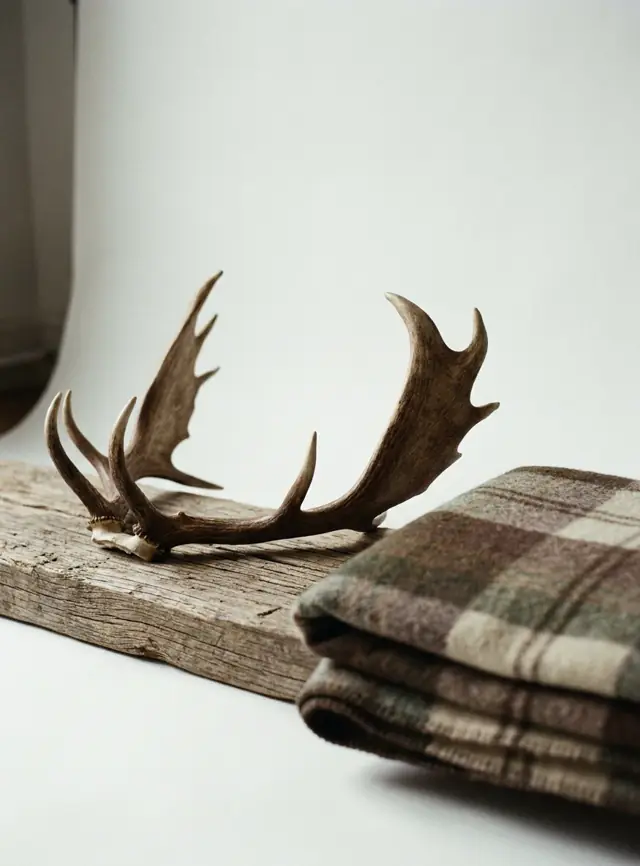
"His head cannot be well described without painting."
Lore
That is the oldest English book on hunting, The Master of Game, written around 1406 to 1413, giving up on describing a fallow buck's head in words. The old huntsmen also had rules: Turbervile told his readers to call antlers the head, never the horns, of a hart or a buck.
Left and right had names too. The near antler is the left, the off antler the right, as with horses.
It grows with him
A fawn has nothing but two bumps. From then on each year's head is bigger than the last until the buck hits his prime, and then, as he gets old, the antlers start to go back. Drag through his life. The drawings are typical heads, not rules: feed, condition and genes can push any buck a year ahead or behind.
Two bumps
Nothing yet but two bumps under the hair where the pedicles are forming. Even now you can tell a buck fawn by his brush.
Spikes
His first real antlers: one plain spike a side, sometimes just knobs. The name says it. Slim body, long legs, high head carriage.
Tines, and a hint of palm
Brow and trez tines usually appear. The top of the beam may flatten a little into a spoon, or stay round. Still a teenager.
The first palm
Palms generally show with the third or fourth head. Narrow and short, with a few points, and the beams still slim.
A proper head
Longer beams, wider palms, more spellers and a guard tine. The old books called him a buck of the first head. He is filling out through the neck and chest.
The prime head
Heavy beams, broad palms, long spellers. Full potential can take six or seven years to show. A buck like this does most of the breeding.
The one people dream about
Very long, wide, even palms crowded with spellers, and mass right to the top. To the medieval huntsman a great buck was this head: two palms, four forward tines and twenty-four points.
Going back
The palms shrink and lose points, the tines shorten, odd shapes appear, and the coronets thicken on short, sunken pedicles. The body says old too: sagging belly, dipped back.
Average antler mass of 31 farmed fallow bucks of known age, Poland, 2025.
What drives a head
Testosterone runs the cycle and day length sets the clock. Size comes from age, feed and condition, with genes a smaller part than most people think: the Deer Initiative rates feed, shelter and low stress above genetics, and antler traits are only weakly inherited. A drought while the antlers are growing shows in the head.
When is he at his best?
Sources disagree. A New Zealand guide puts the peak at about five to seven years, with decline after eight. An Australian one says antlers can keep growing to about eleven. Both are right somewhere: it depends on the buck and the country.
The antler year
Fallow here run six months out of step with the northern books. The rut is in April, the bucks cast in October and November, the new antlers grow in velvet over summer, and they are clean by about February. Month by month, starting with summer:
Growing in velvet
The new antlers are growing fast under a skin of fine hair, blood vessels and nerves. Soft, warm and easily hurt, so a buck in velvet is careful with his head.
Clean
Growth stops, the bone hardens, the blood supply to the velvet shuts down and it dries and flakes. The buck thrashes saplings to strip it, and for a day or so he walks about with rags of skin hanging off his head.
Hard antler, pre-rut
Polished and hard. Necks start to swell, bucks begin fraying and scraping, and the first groans can start in the second half of the month.
The rut
Antlers are weapons now, and used like it. The main frenzy runs two or three weeks, usually peaking in early to mid April.
Hard antler
The rut winds down and the bucks, worn thin, drift back into bachelor groups through winter, still carrying hard antler.
The last weeks
Still in hard antler. The bone at the base is being broken down, ready to let go. A few of the oldest bucks may cast at the end of the month.
Casting
The main casting month. The oldest bucks drop first, younger ones hang on into November, so on a given night you can see a buck in full hard antler and another with nothing but two raw stumps. A freshly cast pedicle is raw for a few days before it skins over and the new antler starts.
The last to cast, the first to grow
The last young bucks drop their antlers. The early ones already have soft velvet knobs on their pedicles. Fawning starts at the end of the month.
Velvet
Every buck is growing a new head in velvet. Most fawns are born this month.
On this trip
In October you will see bucks in hard antler and bucks that have just cast. An antlerless buck is not a doe: look for the brush under the belly and a heavier neck. For the freezer they are all the same animal.
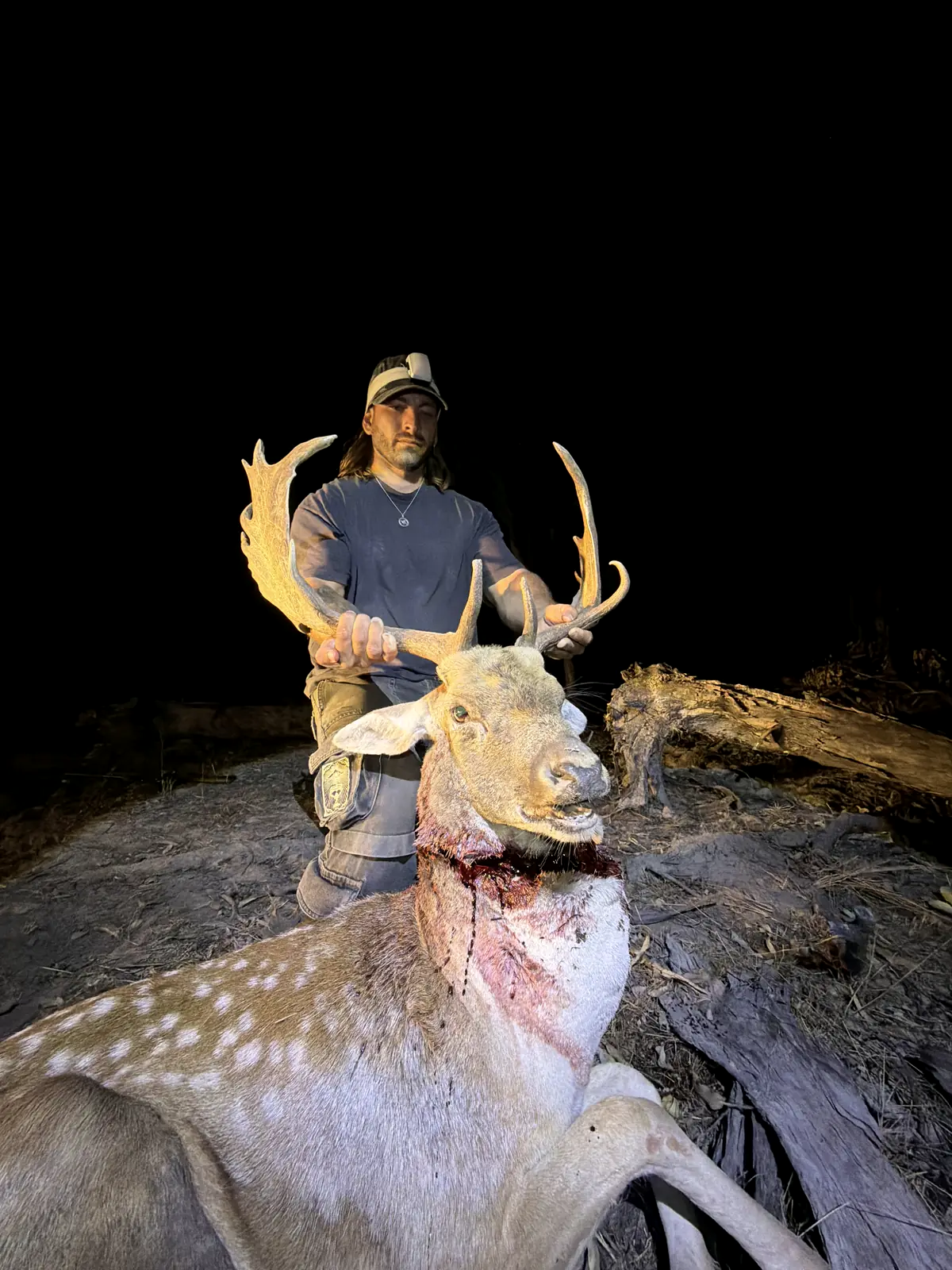
If you take a buck in hard antler, the head is a trophy as it stands. Cast antlers lying in the grass are fair game to pick up on private land with the owner's say-so. Ask first.
Drag across. Velvet antler is rounded, blunt-tipped and soft, covered in short hair. Hard antler is polished bone with sharp, pale tips.
Lore
Is hard antler dead bone? Most books say so. One study of fallow found living bone cells and a blood supply inside polished antlers until a few weeks before they were cast. Others disagree, and it is still argued over.
- October and November
It lets go
As the spring days lengthen, the buck's testosterone falls and the bone at the join between pedicle and antler is broken down until the antler drops. It is not knocked off. Old bucks go first.
- Within days
A bud on the pedicle
The raw top of the pedicle skins over and a bud of new tissue forms on it. Every antler a buck ever grows comes out of that stump.
- Summer
Growth in velvet
The antler grows from its tips, soft cartilage first, turning to bone behind, fed by the blood vessels in the velvet. Researchers rank it among the fastest growth of any tissue in the animal kingdom.
- February
Hard, and clean
Testosterone climbs again, growth stops and the bone finishes hardening. The blood supply to the velvet shuts down, it dries, and the buck rubs it off against the scrub.
- March to September
Carried
Polished bone, used to display and fight through the April rut, then carried through winter until the cycle starts again.
Antler against horn
People say horns when they mean antlers all the time, and in New Zealand it matters, because you will be hunting animals with the real thing. Antler is bone. It grows from the pedicle under velvet, hardens, and is dropped and regrown every year, usually branched, and in deer it grows on the males only, except reindeer and caribou, where the cows grow it too.
Horn is a sheath of keratin, the stuff of fingernails, over a core of living bone that grows out of the skull. It is never dropped, it never branches, and it keeps growing all the animal's life. Tahr and chamois carry horns, and both sexes have them.
Horn growth slows each winter, which leaves a ring. A tahr adds one ring a winter, so you can count a bull's age on his horns. Antler leaves no such record: it is new every year.
Going on to New Zealand
The Tahr and Chamois volumes pick this up: how to read a bull's rings through a spotting scope, and why a tahr's horns grow fastest in his first five years and slowly after that.
Lore
Caribou are the only deer whose cows grow antlers, and the cows drop theirs on the calving grounds within days of giving birth. In Alaska, 86% of the cast antlers on those grounds had been chewed, nearly all of them by caribou: a supply of calcium and phosphorus laid down exactly where the mothers need it.
Judging a head
A good fallow head, by the Australian Deer Association's description, carries all the scoring tines on both sides, the brow, trez and guard, with beams at least 25 inches long and about the same spread. Big heads reach 30 inches by 30. After that it is palms: long, wide and even, with no clefts or splits, and plenty of spellers off the back.
On the hoof, look at the pair, not one side. Check both brows and both trez tines are there, then the length and width of the palms, then the mass: thick beams carried right up into the palm. Then look at the buck under them. A big head on a young, slim buck will be bigger in two years, and the herd is better for leaving him.
Australia and New Zealand score antlers by the Douglas system, devised by Norman Douglas and first used by the Waikato branch of the New Zealand Deerstalkers' Association on 25 June 1949. NZDA adopted it officially in 1958, and the Australian Deer Association uses it for its national trophy register.
Everything is measured in inches, to the nearest eighth: the length of each antler and each tine, the beams around, and for fallow the length and width of the palms, measured with and without the points. Each measurement is taken on both sides, and the shorter one is doubled. Spread and span add to the total. The result rewards a matched pair: an extra inch on one side earns nothing.
The ADA's yardsticks for fallow: over 200 is a trophy, over 225 exceptional, and every year a couple of monsters top 240. Its top 50 now needs at least 250, and to take first place a head would need more than 280.
One pair of measurements, for the principle only. A real Douglas score adds many of these, plus spread and span. For the ADA's top lists a head is measured by an accredited scorer, then checked by a panel after it has dried for 60 days.
Douglas
Imperial, symmetrical, no weighing. Used in Australia, New Zealand and Papua New Guinea. NZDA's record book wants 200 for a fallow.
CIC
The European system, in centimetres, and it weighs the antlers after at least 30 days' drying. For fallow, bronze is 160 points, silver 170, gold 180. A bronze head has beams of about 60cm and weighs about 3kg dry.
SCI
Safari Club International keeps its own record book with its own method. American hunters use it, and so do many safari outfitters in New Zealand, so ask which system a guide's numbers are in.
Lore
When the ADA last reported where its top 50 fallow heads came from, 17 were from South Australia, 14 from Tasmania, 14 from NSW, four from Victoria and one from Queensland. Not long ago 220 was a benchmark head. Now 250 barely gets you on the list.
Old words, odd facts
- Mew
- To cast. "The hart mews his horns." From the French muer, to change, the same word falconers used for a moulting hawk. The royal mews in London were where the king's hawks moulted, long before they were stables.
- Fray
- To rub the velvet off against saplings, and later to thrash them in the rut. The stripped trunk is a fray, and it is good sign.
- Burnish
- To polish the new head after the velvet is gone. The old books said harts burnished their heads in charcoal burners' pits, which turned them black.
- Velvet
- The living skin over a growing antler. Hunters were already calling it velvet when The Master of Game was written, more than six hundred years ago.
- Espelers, avauncers
- Spellers and forward tines, as the Boke of St Albans spelled them in 1486. Its great buck needed twenty-four espelers.
- Near and off
- Left antler and right antler, as on a horse.
- Spoon head, shovel head
- Old names for the head of a young fallow buck, with its little spooned tops, and of an old one.
- Going back
- What an old buck's antlers do: shorter, lighter and odder each year.
- Drop tine
- A point that grows downwards off the beam or palm. Unusual, and prized by some.
Lore
Antler is the only mammal organ that grows back complete, every year. Researchers rank its growth among the fastest of any tissue in the animal kingdom. A fallow buck can put on up to 70cm of antler in three or four months of growing, more than half a centimetre a day on average.
Lore
Cast antlers do not lie about for long. Deer and other animals chew them for the calcium and phosphorus, which is why old sheds turn up gnawed.
Pick one up
Turn a cast antler over. The base below the coronet is rough and slightly domed, where the join was eaten away from below until the antler fell. Bucks do not knock them off. They let go.