Reading the wind
0%
Through the scope onto a fallow buck, the shot, and the round in flight
Lore and Lead

You've eaten a
thousand animals

and never met one. No barcode, no plastic wrap, no fluoro lights. Three days out where your dinner still has an opinion about it.

One shot is
the whole job

Not the rifle, not the scope. Where it goes, and whether you had the patience to wait for the one you wanted.

Then the
mountain

Four days later you are in the Southern Alps watching the helicopter go back down the valley without you. The weekend is where you find out whether you are ready for that.

Fallow buck280 m
VitalsHOLD
Wind 4kt left00%
The package

The weekend,
then the mountain

Three days on a block an hour inland of Tenterfield, then five days in the Southern Alps on the West Coast of New Zealand. Flights are the only thing you sort.

Part one Fri 9 to Sun 11 October

The practice weekend

New South Wales

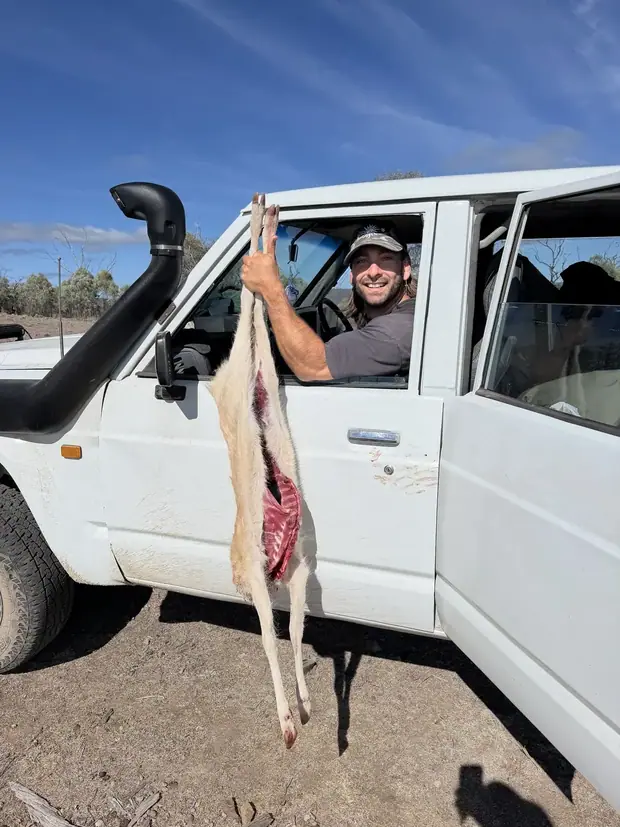
Six thousand acres, fallow deer and roos. Safety and zeroing, then plate racks and gongs at whatever distance you reckon you are good for, then spotlighting off the back of the ute after dark. You gut it, skin it, hang it and break it down yourself on the Sunday.

You go home with an esky full of meat and a rifle you can actually trust yourself with.

What the weekend looks like →
Part two Thu 15 to Mon 19 October tentative

New Zealand

Southern Alps, West Coast

Heli into the tops. Tahr up high, with chamois and kea for company. Five days out of a backcountry hut, glassing valleys and making your own way up where there is no track.

It is steep, it is cold and it is proper work. That is why you do the weekend first.

What the mountain looks like →
Covered, from when you land to when you fly out Flights are the only thing you sort
  • Helicopter in and out
  • Guide fees
  • Rifles and ammo
  • Permits, passes and animal tags
  • All food and accommodation
  • Trophy fee, if you get one
  • Caping and skinning, ready for the taxidermist
  • Car hire, fuel and every transfer, airport to airport

Nobody can promise you an animal. You will get your opportunity and the country decides what you take. Everything else is handled.

Get ready for both trips →

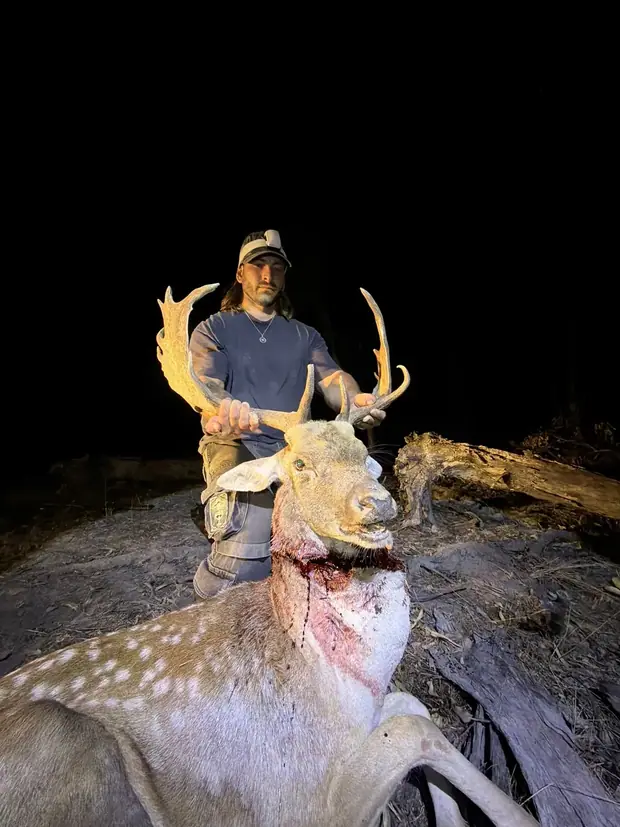
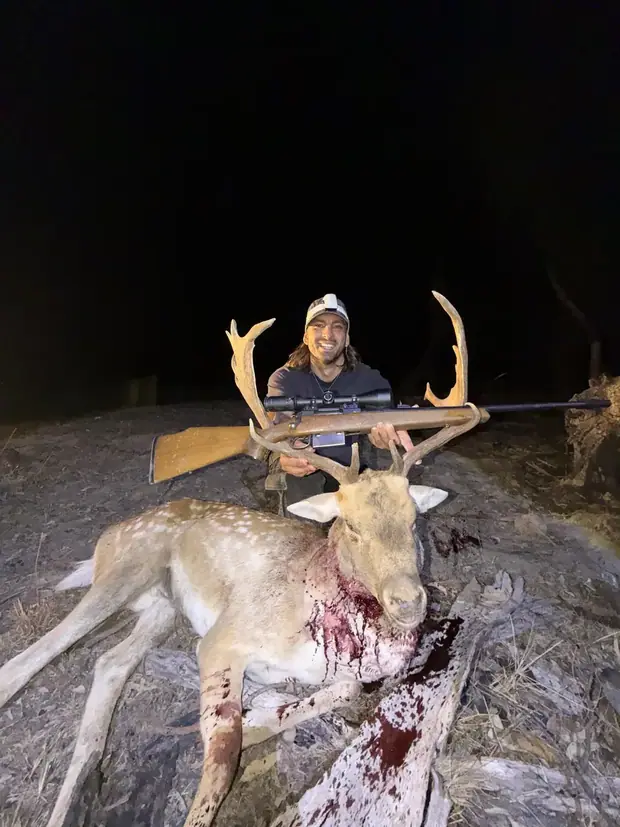
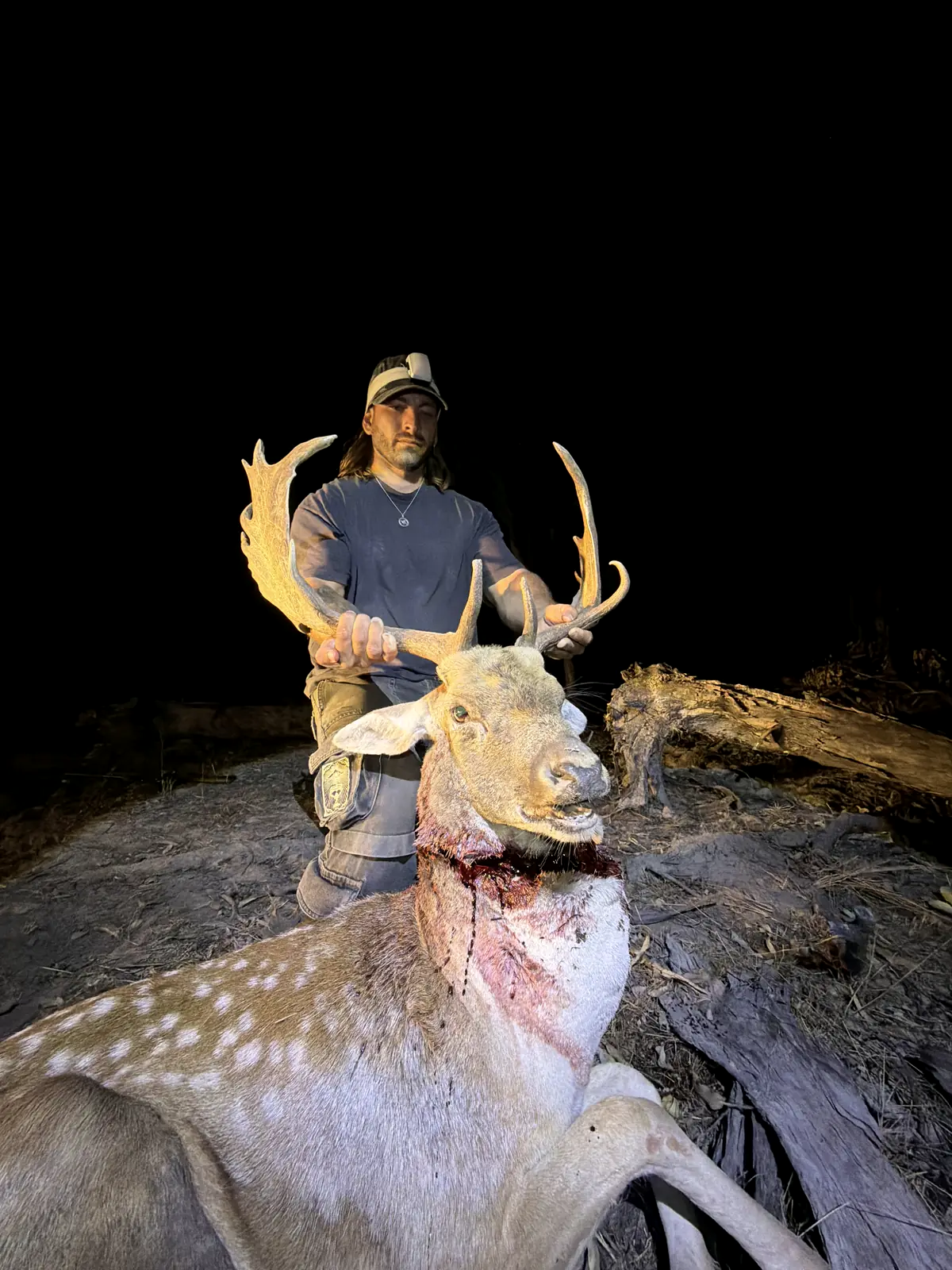
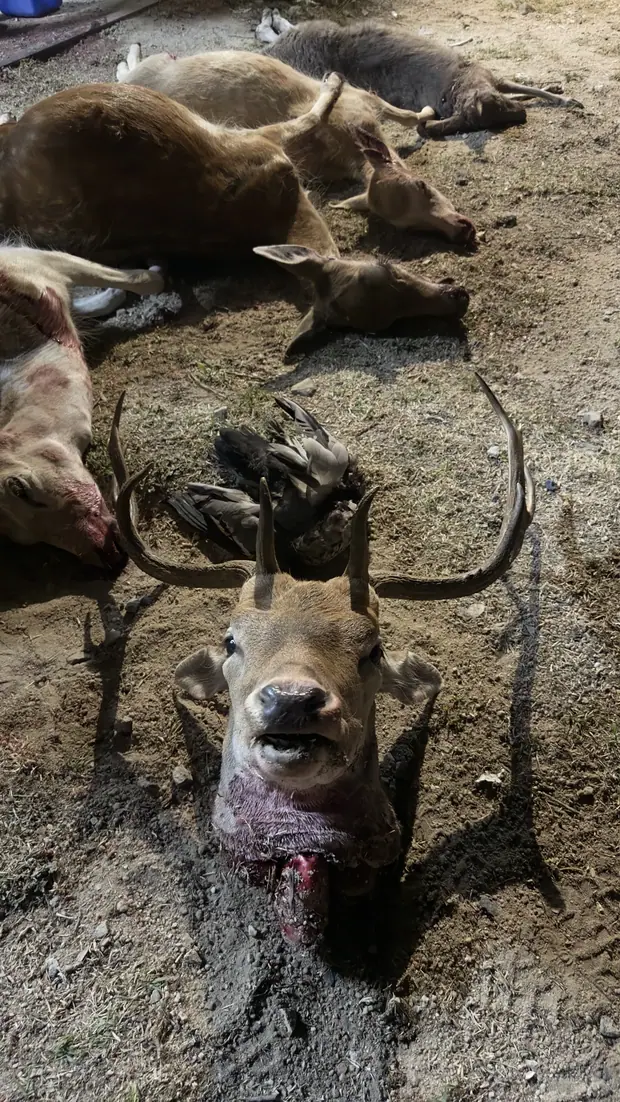
A big fallow buck taken at night, held up by the antlers
Part one

Silent
Grove

It's the practice weekend. Nobody told the bucks.

New South Wales ยท 9 to 11 October

Three days on six thousand acres, and you do all of it

Friday arvo through Sunday night, an hour inland of Tenterfield. A driver and two guides. Rifles, unlimited ammo, every meal, firewood, ice and knives all sorted. You bring something to sleep on, something to sleep in, and the biggest esky you own.

You'll be taught to handle a rifle properly, shown how to zero it and where the shot goes, and then you'll use it. After that comes the part nobody else lets you do. You gut it, you skin it, you hang it, and on Sunday you break it down yourself with every cut named as it comes off.

Small groups only. We'd rather knock people back than run it badly.

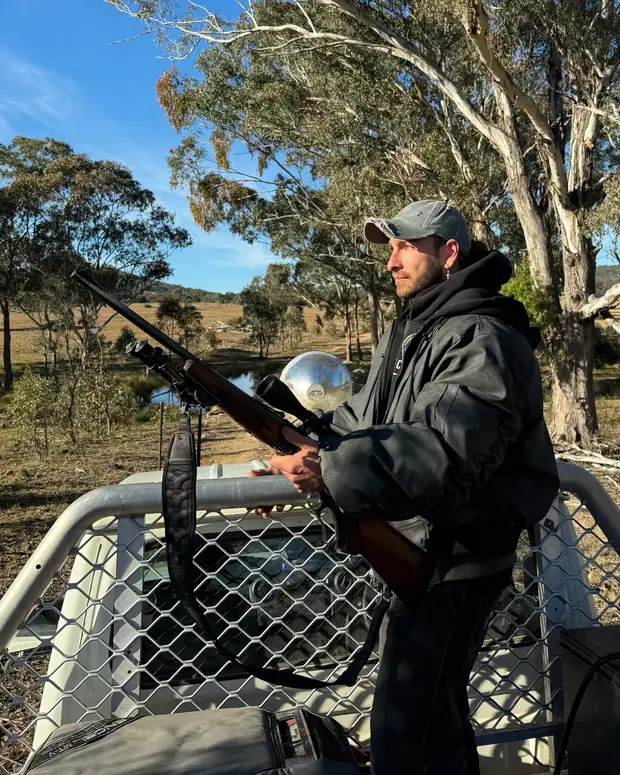
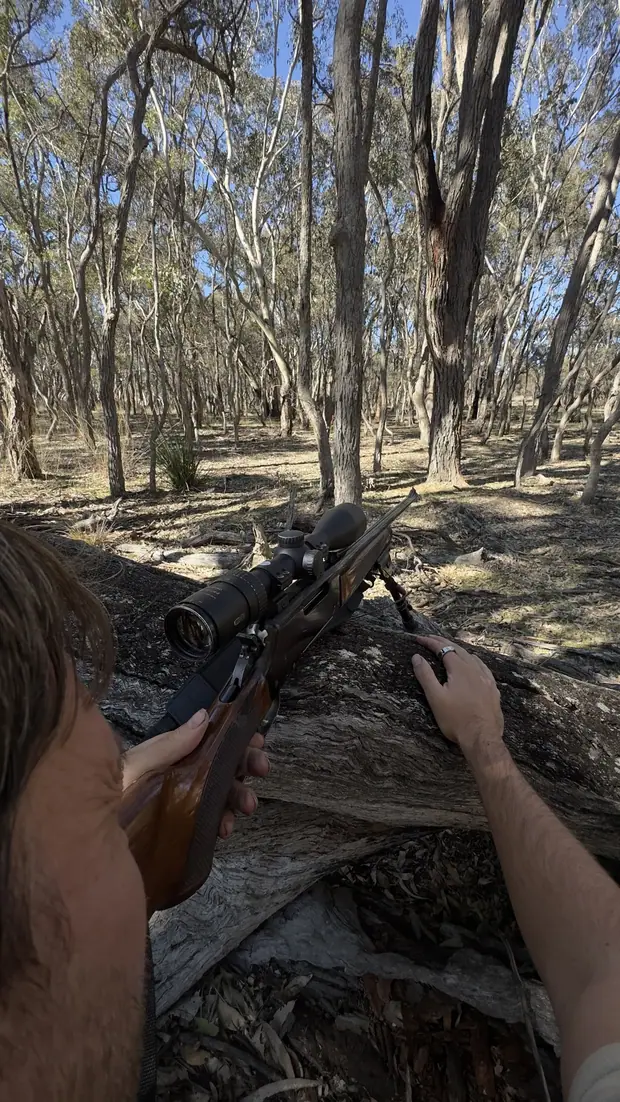
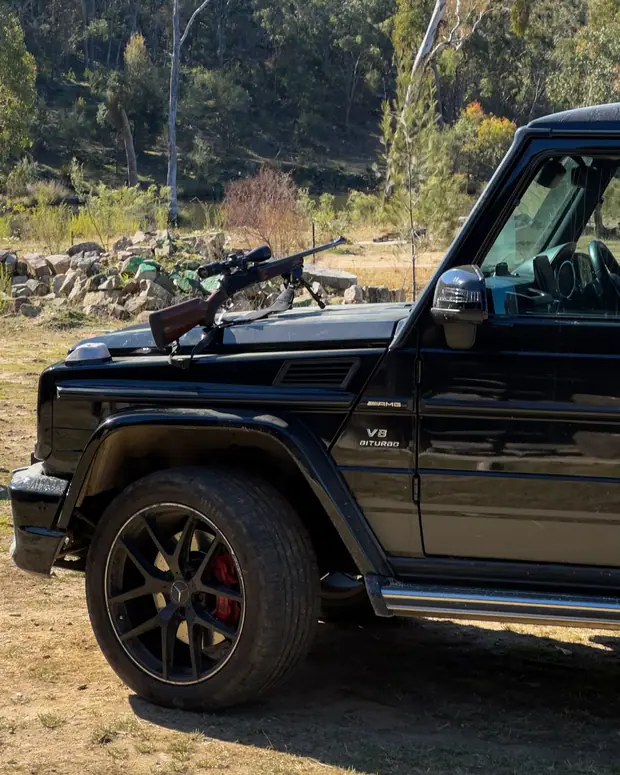
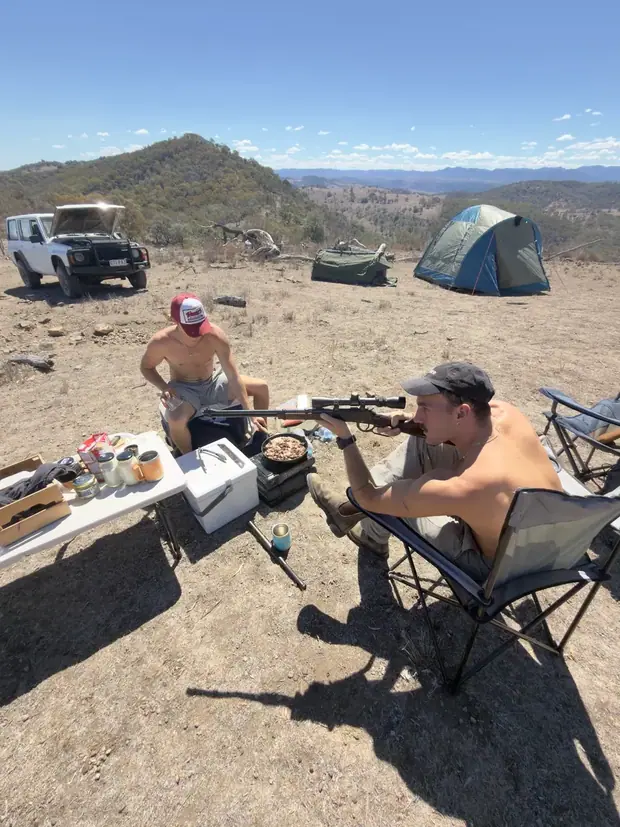
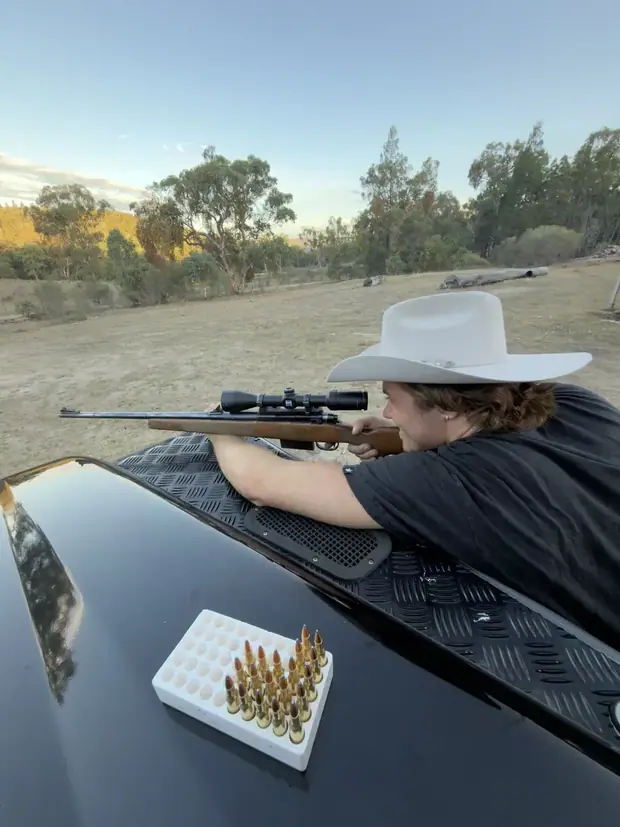
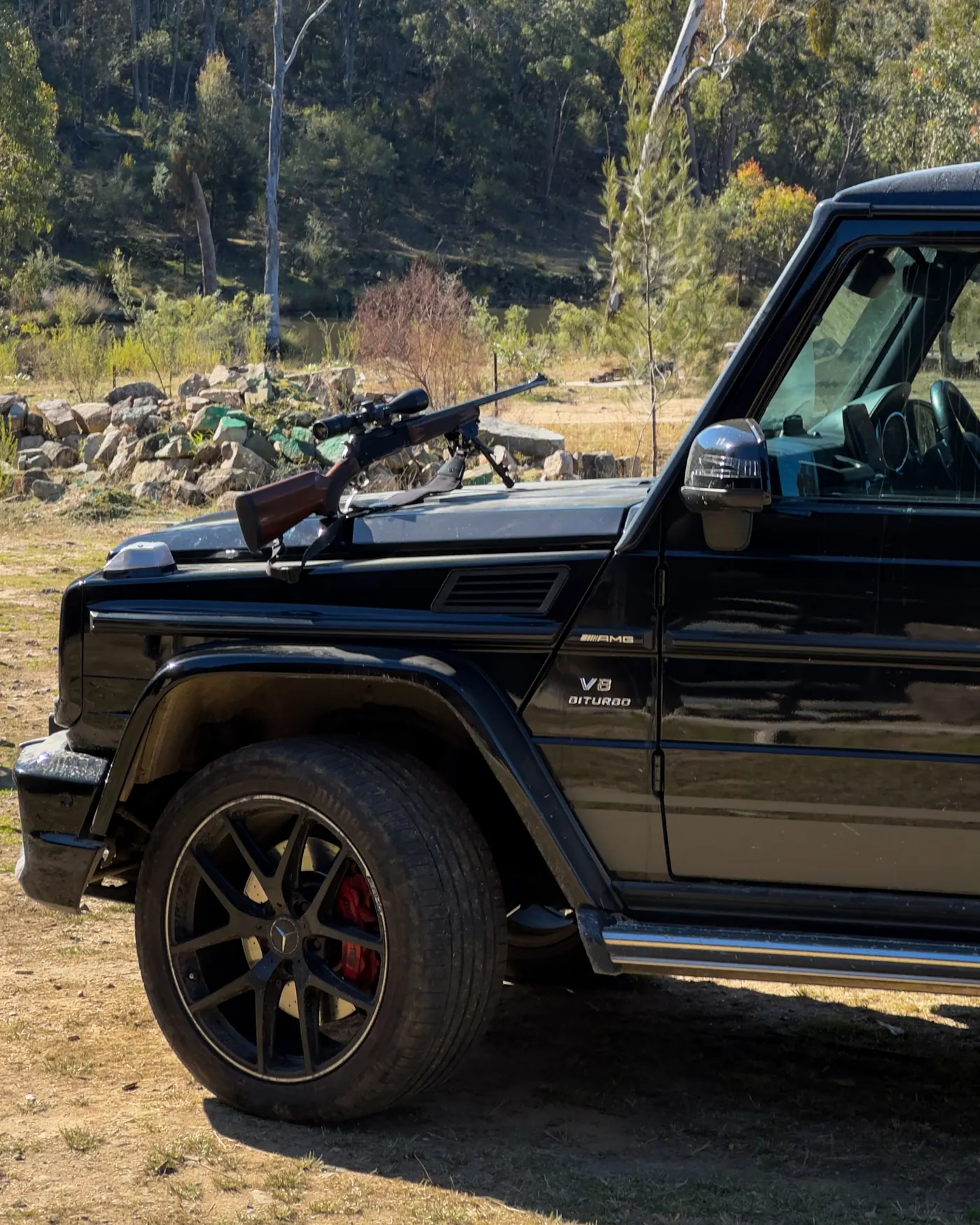
Rifle on the bonnet of the G-Wagon
Loaded up
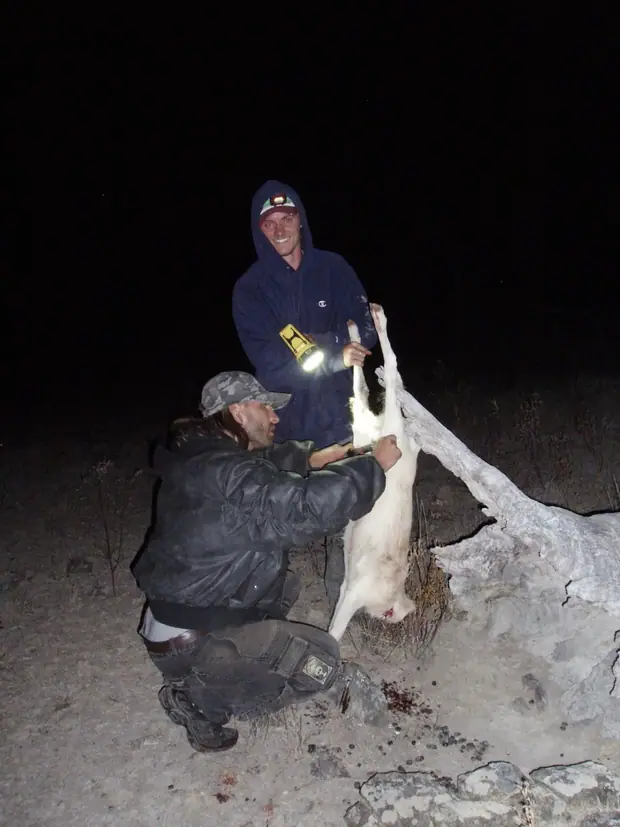
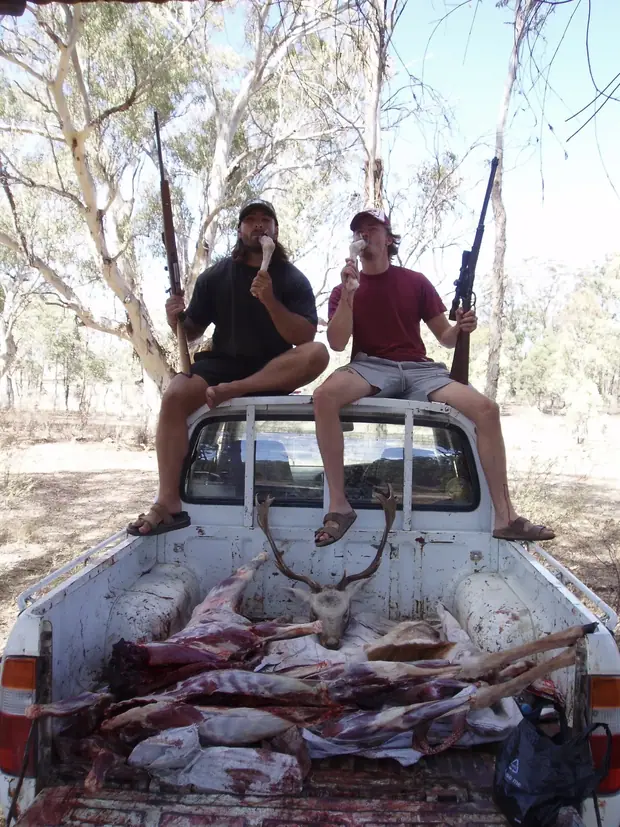
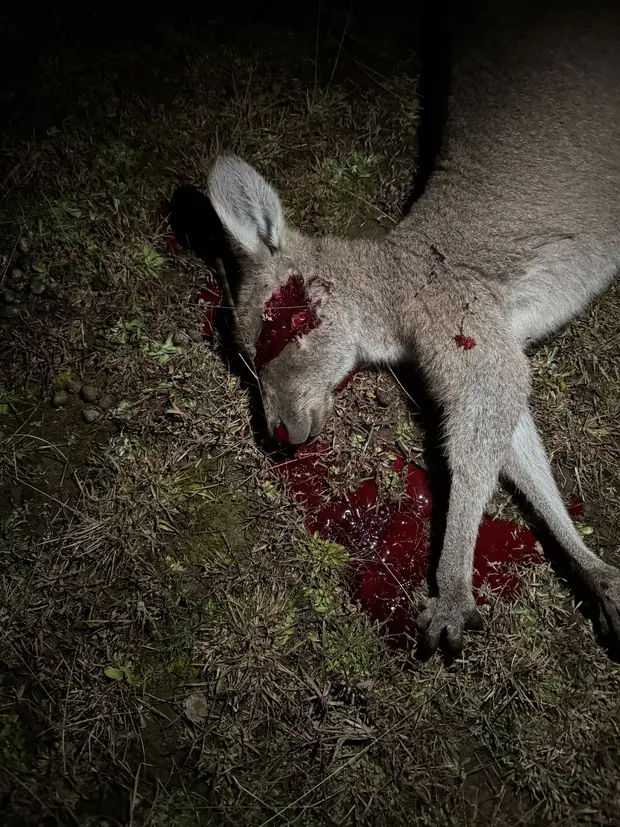
Off the back of the ute
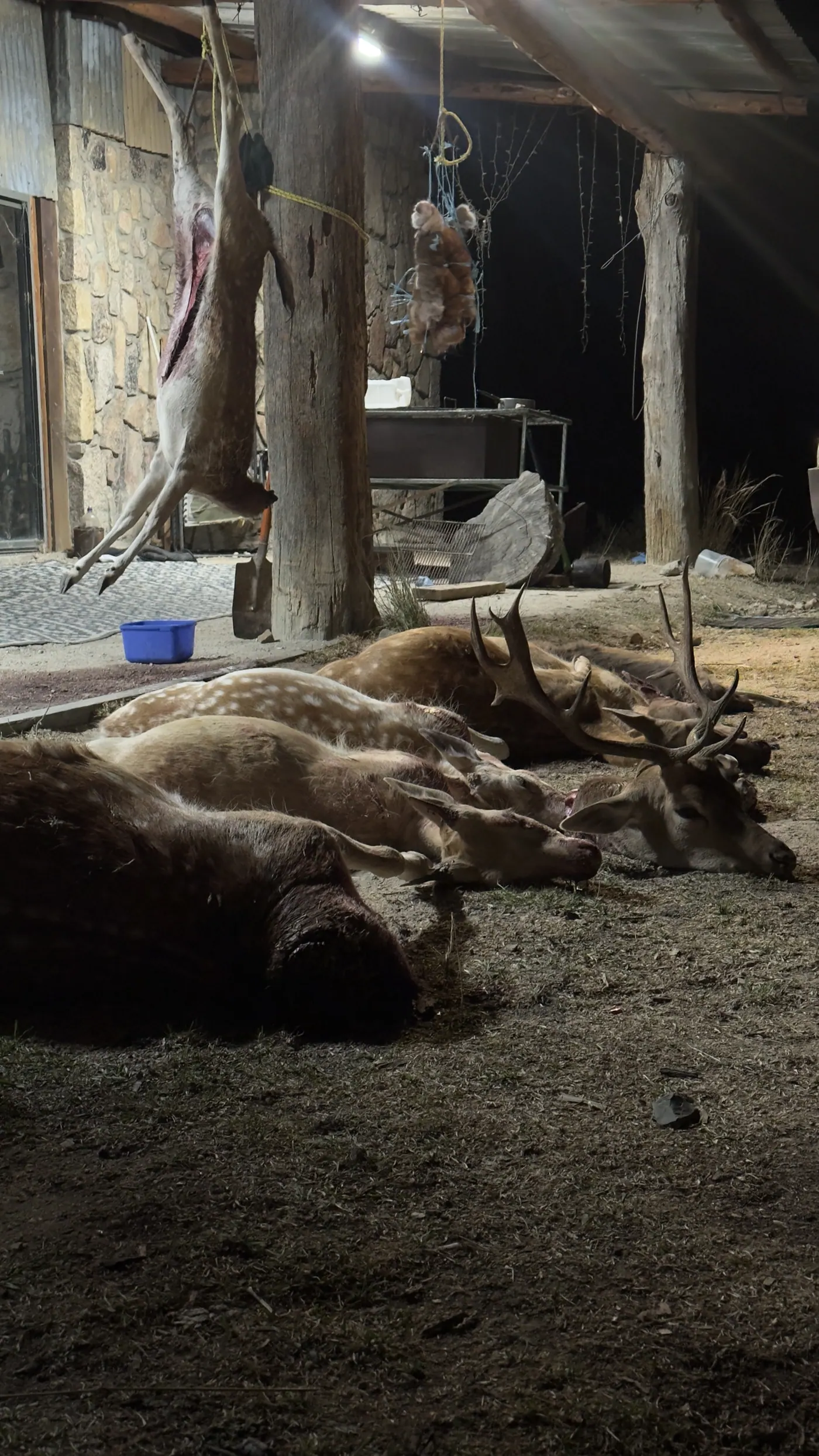
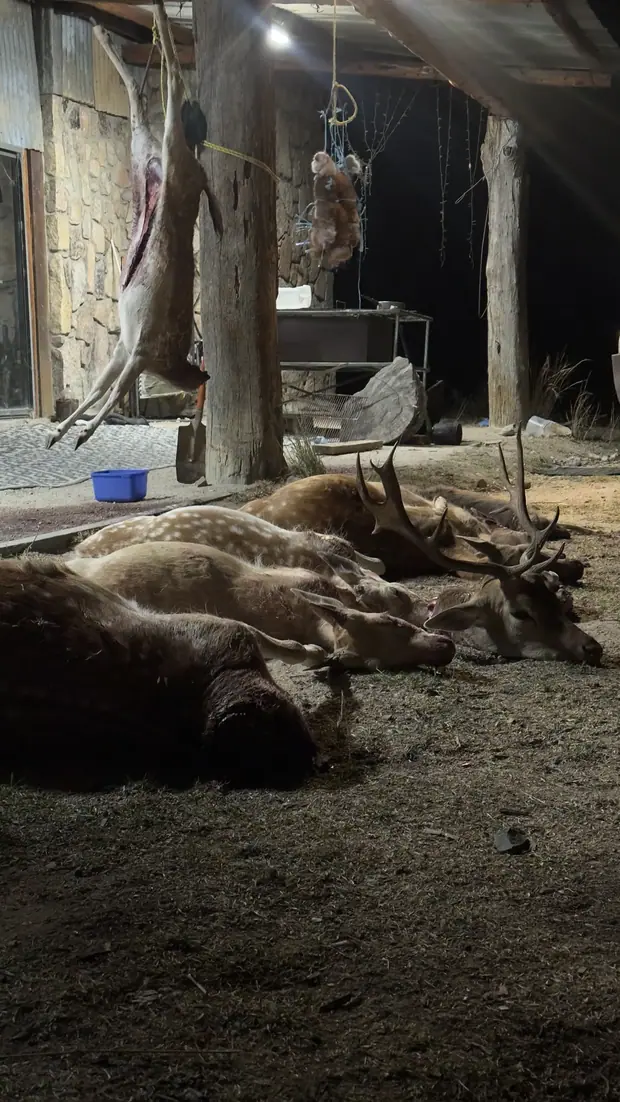
A night's work laid out
A good night
After dark
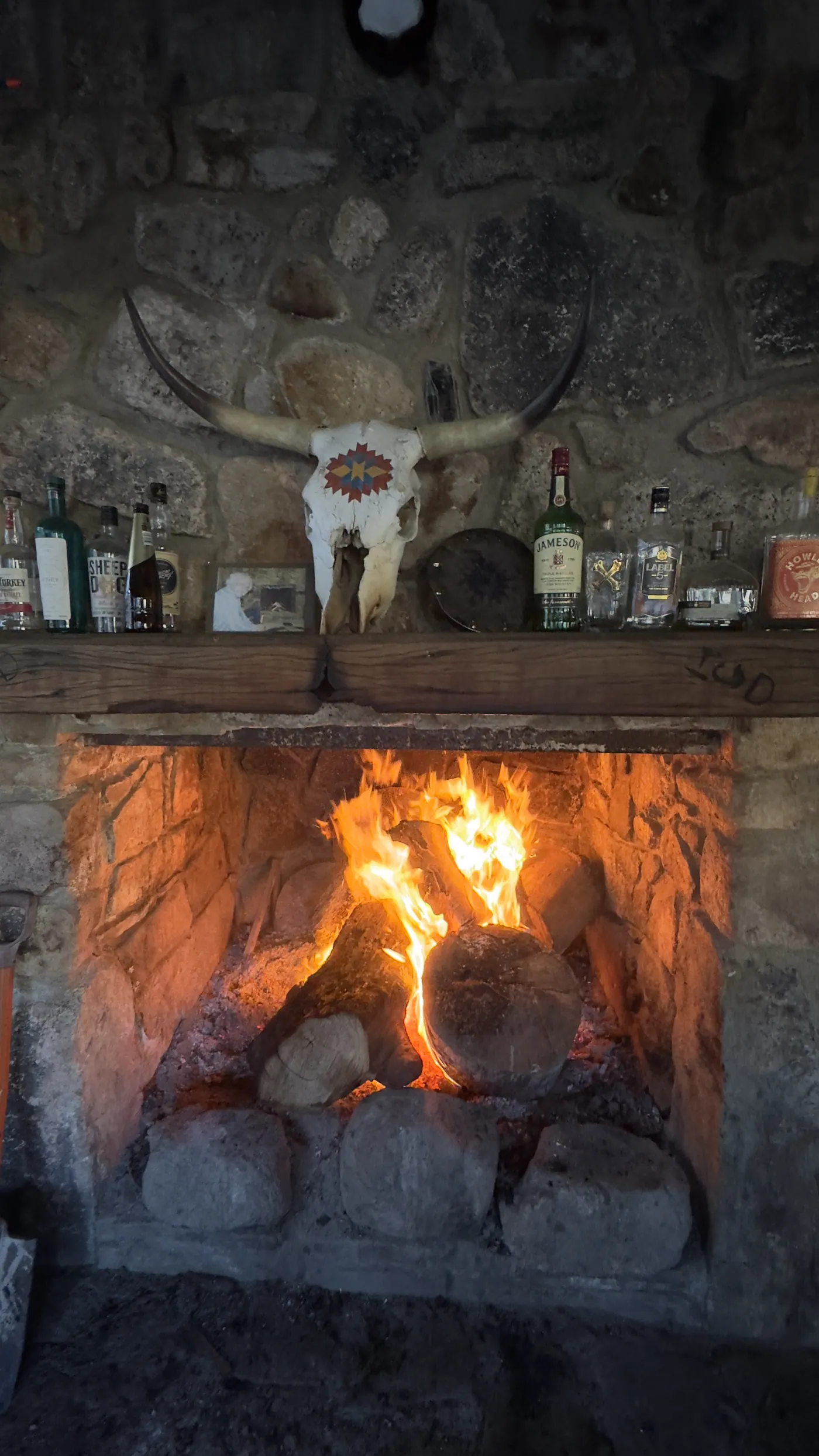
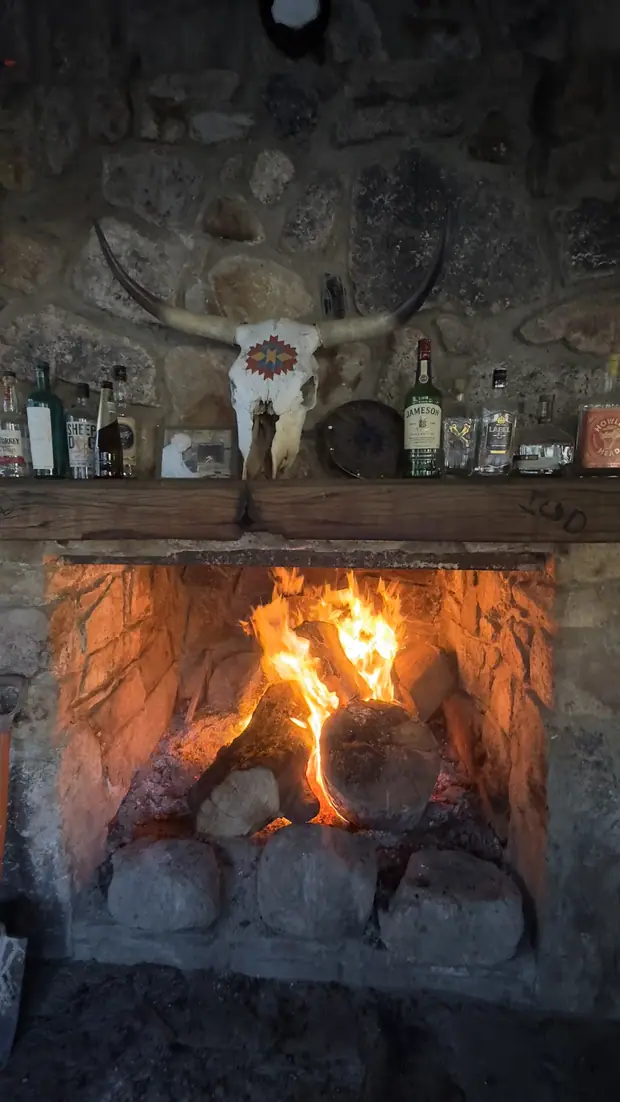
The fireplace inside the hut
The hut
3Days, 9 to 11 Oct
6,000Acres of it
6Deer, best weekend so far
0Bars of reception
Who it isn't for

If you want a lodge, a chef and a hot towel, this is the wrong weekend. If you're a beginner, that's fine and we'll teach you. If you've been hunting twenty years and just want a good block to shoot on, you'll probably find us slow.

Chuck it in the bag

What to bring

Nearly all of it is already sorted. Two things matter, and then there's the usual.

The one that matters The biggest esky you own

A big one. We're confident we can fill it with deer and roo, so this is the thing worth borrowing off a mate if you haven't got one. Go big. Ice is covered, and it goes home chilled, not frozen.

01
The other one Something to sleep on, and in

A sleeping mat or a flat mattress, and a sleeping bag. No bag? A doona and a pillow does the same job and nobody's checking. Don't skip the mat: there are three couches and more of you than that.

02
Warm gearWool if you have it. It gets into single digits at night and colder down in the gullies. Layers beat one big jacket.
Two changes of clothesYou're going to get blood on you. That's not a maybe.
A towelThere's a hot shower. Rough, but it works.
Whatever you walk inBoots if you've got them. Runners are fine.
Head torchAnd spare batteries. You'll use it more than you think.
Phone chargerIf you want it. Solar bank's coming, cords are on you.
Cryovac machineOnly if you've already got one. We've got one and a second halves Sunday for everybody.
Your good knivesOurs are sharp and there's plenty, but everyone's got a favourite.
BinocularsIf you own a pair. Not essential.
Any food you wantAll the meals are covered. If there's something you can't go without, bring it.
Your usual stuffMedications and whatever else. You're a grown adult.
Anything else you fancyCamera, camo, a chair. If you want it there, put it in the ute.
Already sorted

Rifles, unlimited ammo, every meal, firewood, ice, knives, sharpeners, ear plugs and water. Don't bring cash, there's nothing to spend it on.

Leave at home

The crinkly rain shell. They hear it well before they see you. Dull colours beat bright, but camo isn't required.

Banned

Nothing, but the rifles and the drinking never overlap. Once they're away for the night, have one if you want. Matt and Leif are both off it, so there's no pressure either way.

Different trip, different bag. You are carrying what you need up the hill yourself, so everything in here earns its place.

The one that matters Boots you have already walked in

Stiff sole, over the ankle, and broken in well before you get on the plane. New boots on a New Zealand sidehill is how you write off five days. If yours are past it, say so early.

01
The other one Wet weather gear that actually works

Jacket and overtrousers, not just a jacket. It rained on more than half the days across the last ten Octobers on that coast. A shell that gives up on day two means four days wet, and wet up there is a different problem than wet at home.

02
GaitersKeeps scree, snow and spaniard out of your boots. Cheap, light, and you will be glad you packed them inside the first hour.
ThermalsMerino top and bottom. Two sets if you have them, one to hunt in and one that never leaves the hut dry bag.
Good socks, more than you thinkMerino again. A dry pair waiting at the hut is the best part of the day and it is not close.
A mid layerFleece or a light puffer. Layers again, not one big coat. You will be hot climbing and cold the second you stop to glass.
Gloves and a beanieYou lose your hands fast up there, and most of the heat goes off your head while you are lying still behind glass.
A day packThirty to forty litres, with room for a water bottle. It carries your layers up the hill and some of an animal back down it.
Sunglasses and sunscreenSnow throws the lot straight back up at you. People come home burnt under the chin and under the nose.
Head torchSame as the weekend. Spare batteries, and keep them somewhere warm overnight.
A warm sleeping bagRated for the cold, not the one from the school camp. More than half the nights up there go below freezing in October.
Dry bagsOr bin liners, nobody is judging. Something in that pack has to still be dry at the end of the day.
Poles, if your knees have opinionsUp is the work, down is the damage. Plenty of good hunters use them and nobody says a word.
Your usual stuffMedications, and anything you cannot buy in a hurry in a small town.
Already sorted

Rifles and ammo, permits, passes and animal tags, the helicopter both ways, the hut, all the food and every transfer from the airport. Your trophy fee is in there too, so if you get one there is nothing more to pay.

There is a shop stop

We pull into a hunting and fishing store once we land, so anything you are missing or not sure about you can pick up then. Thermals, socks, gaiters, gloves, a better jacket, whatever you want. It is all in New Zealand dollars, so it works out cheaper than buying it here first.

Leave at home

Cotton. Jeans, cotton hoodies, cotton socks. Wet cotton at altitude is a genuine problem rather than just an uncomfortable one, and it never dries in a hut.

What you actually get

Four things, and none of them are a hot towel.

No. 01

Learn the lot

Safety, zeroing, where the shot goes, then a stalk and a spotlight run. After that you gralloch it, skin it, hang it and break it down yourself. Every cut named as it comes off.

No. 02

Shoot properly

A 6.5 Creedmoor, the .223s, and as much ammo as you can get through. Plate rack and a gong at whatever distance you reckon you're good for.

No. 03

Good people

Small group, long nights, no reception. You'll know these blokes properly by Sunday, which is more than most weekends manage.

No. 04

Feed yourself

Months of meat in the esky and the first honest answer you've ever had to where'd you get this. No antibiotics, no hormones, no needle.

How it runs

Three daysFive days

Rough shape, not a schedule. It all bends around where the animals are and how much work is hanging on the rail.

Fri

Arvo, and then dark

Roll out early afternoon. If you're coming from further afield we meet at the Tenterfield IGA carpark and convoy the last hour in. Gates, hut, bags dropped, fire lit, no unpacking ceremony.

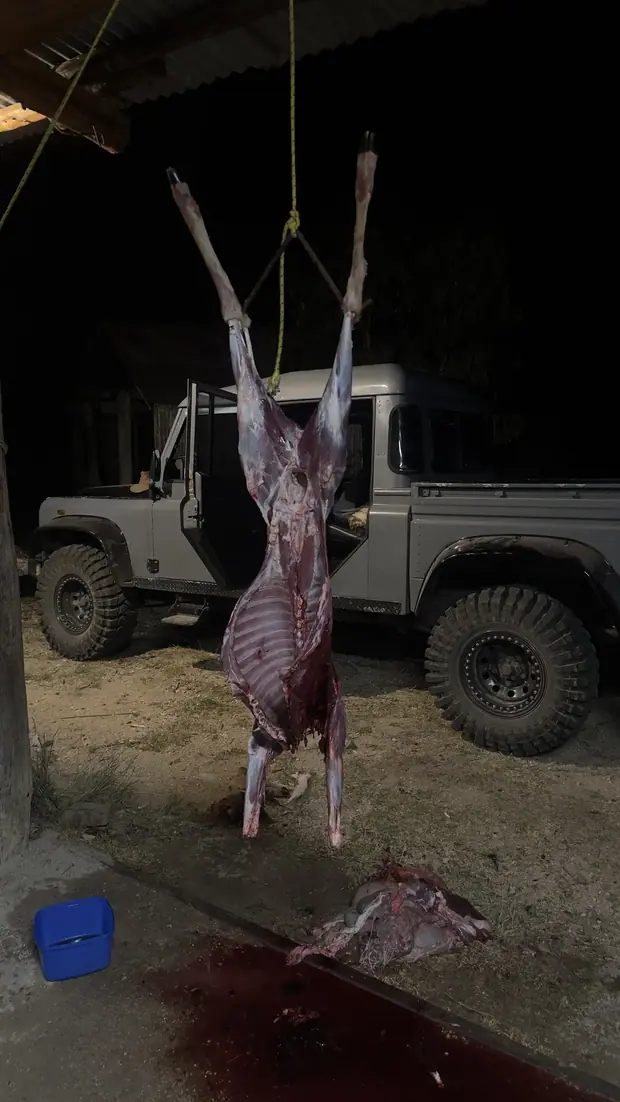
Last light is rifles out: safety, zeroing, shot placement, then the plate rack and the gong until you're actually hitting what you're aiming at. Then the first spotlight run off the back of the ute. Whatever's down gets skinned and hung before anyone sleeps.

On the back of the ute with a rifle and the spotlight at last light
Last light, off the back of the ute
Sat

Sleep in, then the long one

Nobody sets an alarm, you'll have earned it. The day is yours: the gongs and the plate rack set out at whatever distances you fancy, a good long session getting your eye in, a swim if the mood strikes, and a drive around the block to see what's on it. Whatever came down last night is on the fire by tea time. You live off the land out here, and that's half the point.

Dusk and dark are the main game. We work it off the back of the ute wherever we can, because that is far and away the easiest hunting there is and it is the reason you'll get animals on your first trip. Where the ute can't go, we get out and stalk in on foot, into the wind. Then hunt, gut, load, skin, hang, repeat. This is the night that earns the weekend.

Range time, off the bonnet
Sun

Butcher day

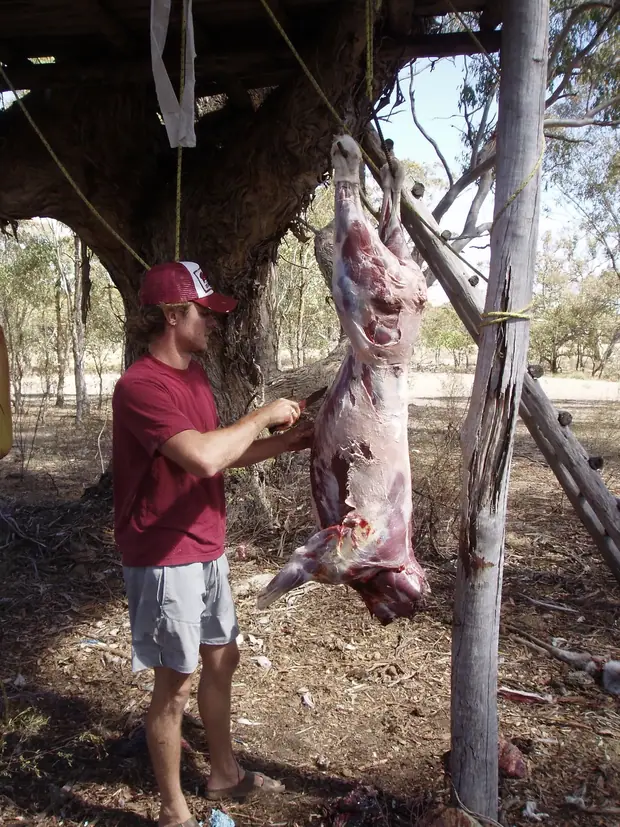
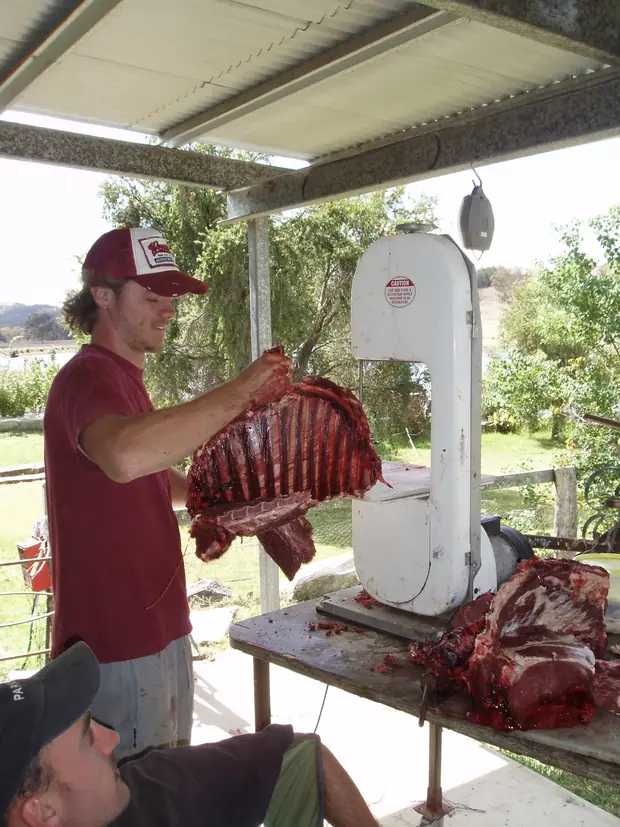
Everything comes out of the cool room and onto the bench. You break it all down yourself, every cut named as it comes off: backstraps, rumps, shoulders, shanks, ribs, mince.

Cryovac what's worth it, bag the rest, ice the eskies, clean the hut properly. Roll out late arvo. You'll get home late and sleep like the dead.

Skinning a deer hung from a treeCutting ribs on the bandsawA carcass hung on the gambrel in the shed
Butcher dayHover over the others to reveal themTap the others to reveal them

Rough shape again, and this time the weather owns it. Helicopters do not fly in cloud, so either end can slide a day, and nobody argues with that.

Thu

Land, shop, fly in

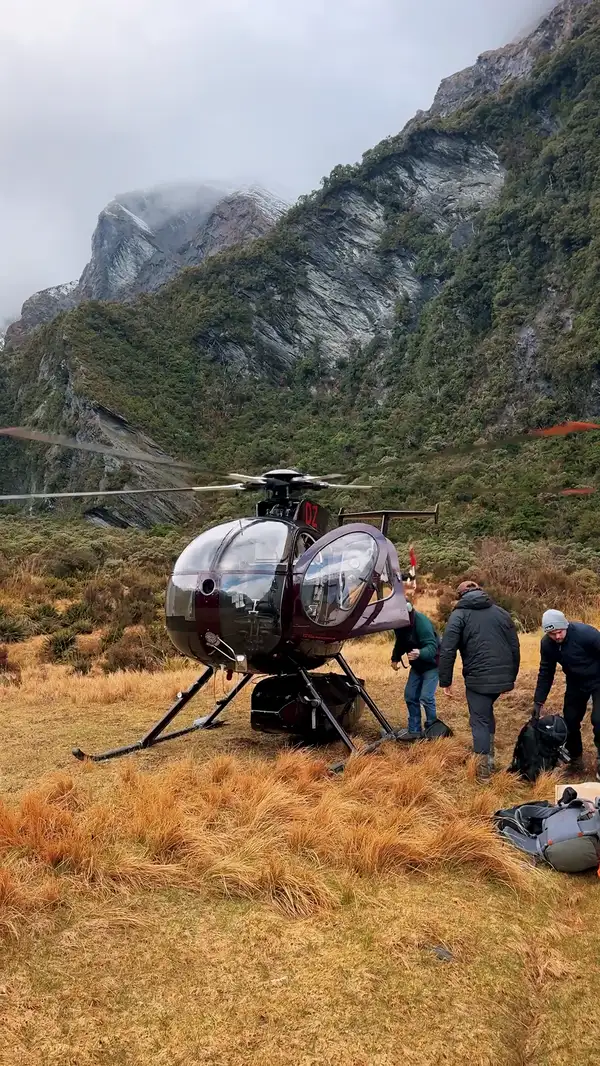
Land, get picked up, and stop at a hunting and fishing store on the way through so anybody missing anything can sort it, in New Zealand dollars. Then the helicopters, weather permitting, and you are dropped in the head of the valley.

Bags in the hut, rifles checked, and if there is light left, the first look over the faces before dark. Nobody shoots on day one until the rifles are confirmed on target.

Door open on the way in
3 days

On the tops

Up early, climb to somewhere that looks over the country, and glass. Most of the day is sitting and looking, broken up by short, hard climbs once something worth going after turns up. Back at the hut by dark, every night.

When an animal is down, the work starts: caping, skinning and breaking it down on the hill, then the walk back to the hut. If the weather closes in, it is a day of glassing from somewhere safe, and that is a normal day, not a wasted one.

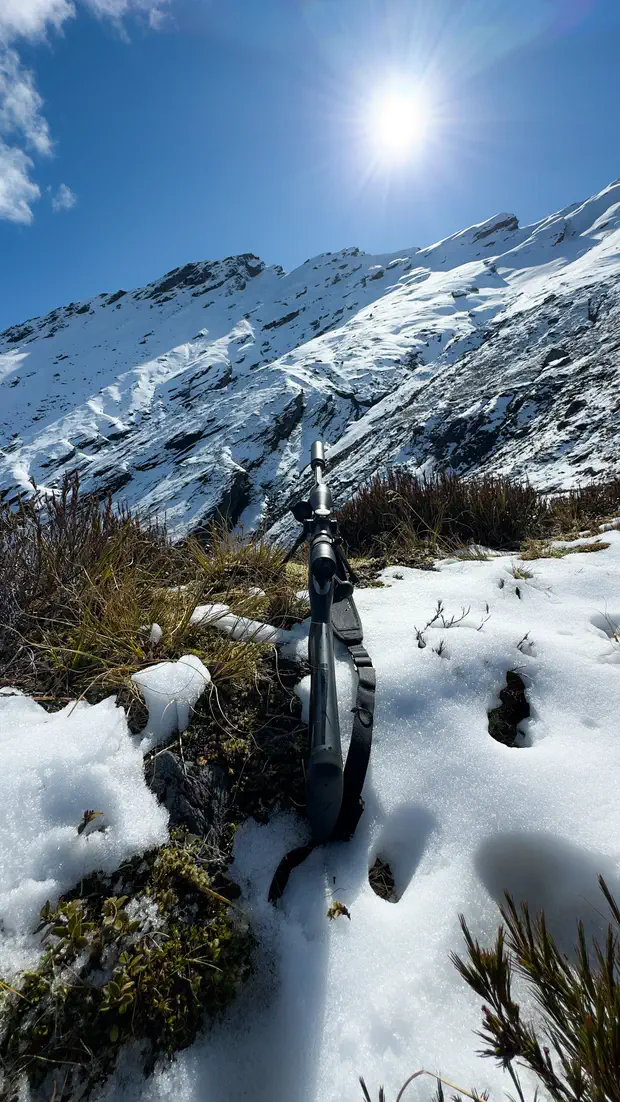
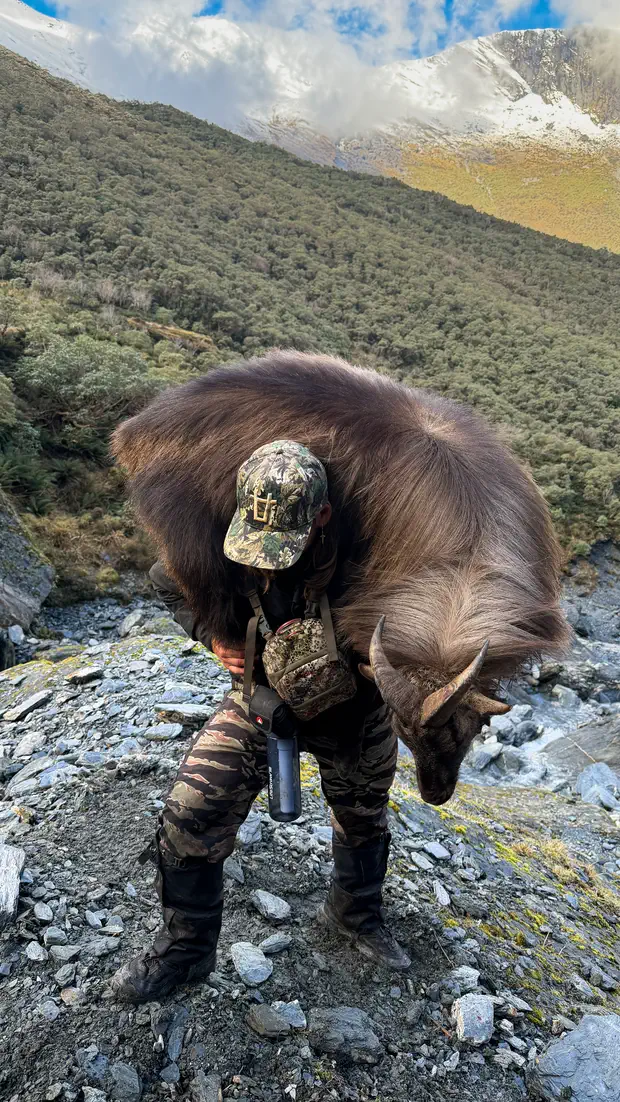
A rifle resting in the snow on the topsCarrying a tahr down the shaleA tahr down on the shale with the valley behind
On the topsHover over the others to reveal themTap the others to reveal them
Mon

The mountain uber

The helicopters come back in when the weather lets them. Capes and skulls go to the taxidermist to be prepared for the trip home, and you head for the airport. It will feel like a lot longer than five days, in the good way.

The mountain uber
Where you sleep

The hut

The bloke who owns this country is in his seventies with a war story for every hour of the day, and he's rough around the edges. So is his hunting hut. That's a feature, not an apology.

The fireplace inside the hut
The hutSilent Grove
01
A proper fireplace

Big open one, inside, and it heats the whole hut. Where you'll all end up of an evening, boots off, telling lies about the shot you missed.

02
Hot shower

Rough, but it runs hot. There's a portable one in the truck as backup. You will still be filthy and that's fine.

03
An actual toilet

Flushes and everything. No shovel, no long drop. Or go bush if that's your thing, it's six thousand acres.

04
Fridge, freezer, cool room

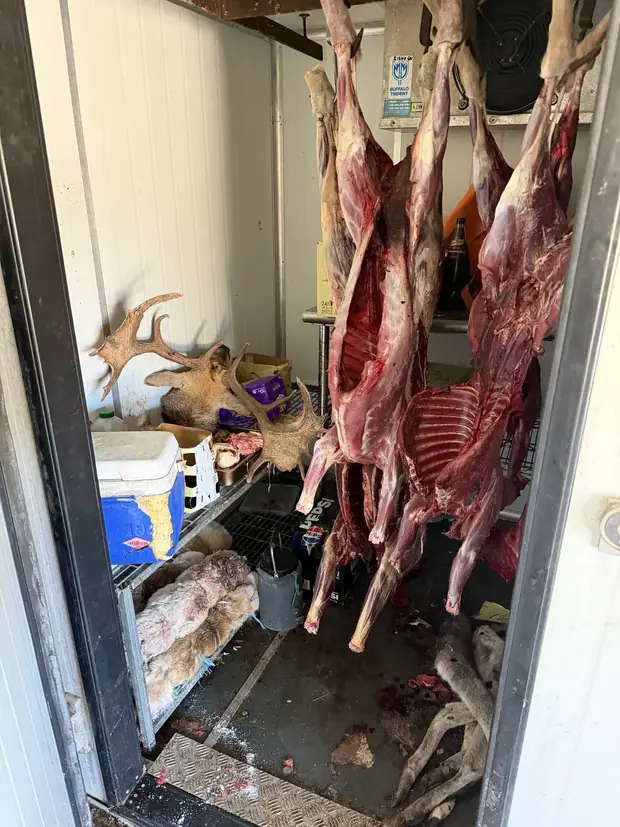
Carcasses hang overnight, go into the cool room, and come out Sunday for the break down. This is the bit that makes the meat good.

05
Solar power

The hut runs off solar and there's a solar bank coming for phones and head torches. Bring your own cords.

06
Three couches

First in gets them. Everyone else is on the floor, which is why a mat or a flat mattress is on your list. Two tents in the truck if you'd genuinely rather, but you wouldn't.

Assume there's no reception

There are a couple of spots on the property that scrape a bar if something genuinely goes wrong, and that's exactly what they're for. Tell whoever needs to know you're gone Friday arvo until Sunday night, then put the thing in your pocket and leave it there. It's most of the point.

A backcountry hut at the head of the valley. No road in, no power, and nobody else for a long way. It is the most remote you will ever have slept, and you will sleep better than you have in years.

The helicopter on a tussock flat, unloading gear below the peaks
The drop offWest Coast
01
Bunks and a roof

Basic, and it has seen far worse weather than anything you will bring. Bring a warm sleeping bag rated for the cold.

02
No power

Nothing up there plugs in. A charged power bank and a head torch, and that is your whole electrical setup for five days.

03
Water off the hill

About as clean as water gets anywhere. You fill as you go rather than carry it.

04
Food goes in by air

Every meal is sorted and it rides in on the helicopter, so the only weight on your back is your own gear.

05
Wet gear dries slowly

Which is exactly why one set of thermals stays in a dry bag and never goes outside.

06
Close quarters

A small hut with the same faces for five days. Pack some patience next to the socks.

There is no reception at all

Not a scraped bar, not a good spot on the hill. Tell whoever needs to know that you are out of contact from the Thursday until the Monday, and mean it.

The armoury

The rack

Unlimited ammo, and you'll shoot all of it if you want to. Before anything gets pointed at something with a pulse you'll be walked through the safety, how to zero, and exactly where the shot goes. That briefing happens by the fire, not on a website.

6.5 Creedmoor

Flat, forgiving and easy to shoot well. The one you'll be handed first if you're new to this.

Deer
.223

Light, cheap to feed and barely kicks. Roos, goats, foxes, and the one that teaches you to shoot without flinching.

Small game
Steel

A plate rack and a gong, set out Saturday at whatever distances you fancy. Most of the weekend's arguments get settled here.

All day
Unlimited ammoEar plugs suppliedRests and bipods Zeroed before you shootBring your own if you'd rather

Longer country, so bigger medicine. Both rifles are suppressed and run a bipod, which matters when the shot is across a valley and you are breathing hard from the climb. Same rule as the weekend: nothing gets pointed at anything with a pulse until you have been walked through it.

6.5 PRC

The reach option. Holds its line in a cross valley wind and still hits hard at the far end of what you should be taking.

Tahr · Chamois
.270

Been doing this job on tahr longer than most of us have been alive. Flat, proven, and plenty of gun for an animal in a bad spot.

Tahr
Suppressed, both

Silencers are standard over there rather than exotic. Less recoil, less blast, and you can hear what the guide is telling you straight after the shot.

Standard
Silencers on bothBipodsAmmo supplied Zeroed before you fly inNo need to travel with a rifle
The app Dope Your holds at any distance, your zero from a photo of the target, and a card for the stock. Works with no reception.
Part two

New Zealand

The ride in is the last easy bit.

Five days in the Southern Alps, and no track out

Inland of Fox Glacier on the West Coast. Two helicopters put you in the head of a valley, and from there you make your own way up. A guide, a backcountry hut, and country that goes from river flat to seventeen hundred metres in about a kilometre of horizontal.

Days are glassing valleys, picking a line, and climbing it. Not a track, not a trail. You pick the spur that looks least likely to kill you and you go. The gnarly bits are the ones the camera stays in the pack for.

Permits, passes and tags are sorted. So are the rifles, the food and every transfer. You bring boots that have already been broken in and legs that have done some hills.

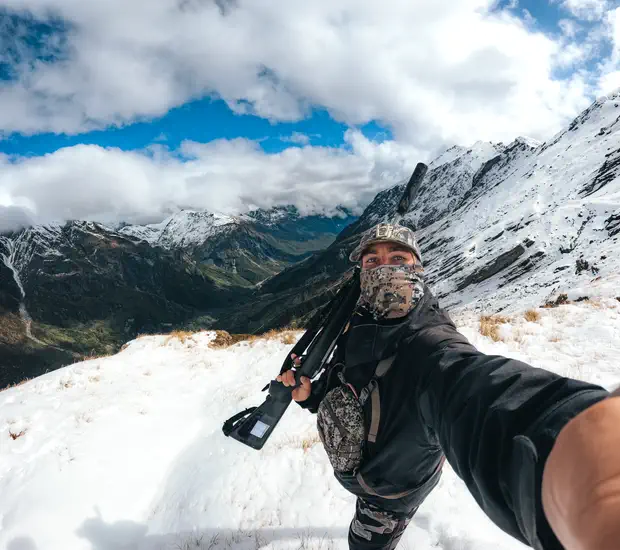
On a snow covered ridge with a suppressed rifle, the valley falling away behind
Above the bushline, West Coast
5Days on the mountain
2Helicopters in and out
1700mValley wall above you
300m+Where the shot came from
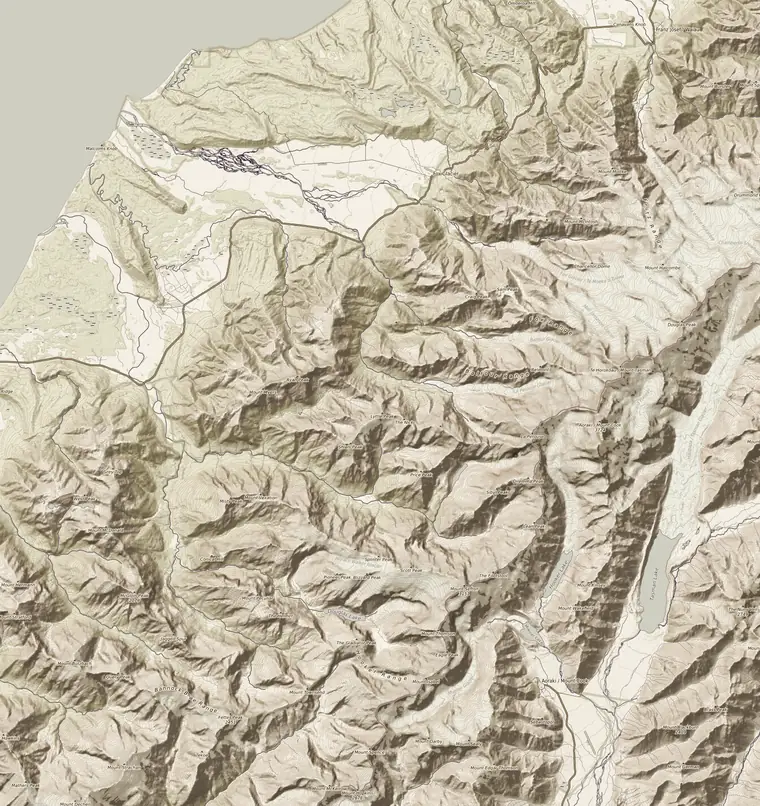
Where it isWestland Tai Poutini National Park
Topographic map of the West Coast around Fox Glacier, from the Tasman Sea to the Main Divide Tasman Sea Fox Glacier Aoraki / Mt Cook Southern Alps Hunting country
© OpenStreetMap contributors, SRTM. Map style © OpenTopoMap (CC-BY-SA)
Fox Glacier
A township on the coastal flat at 163 metres, and where the forecast further down this page is pulled from.
Aoraki / Mount Cook
3,724 metres and the highest point in the country. It is also where tahr were first let go in 1904, and chamois three years later.
The Main Divide
The spine of the Southern Alps. Everything west of it gets the weather straight off the Tasman Sea, first and hardest.
Hunting country
The steep side valleys south of the township. Exactly which one depends on the weather and on where the animals are that week.
The way up 01/03
I

Water

No track in. The first hours are the river, boulder to boulder with white water either side, and wet boots are a given by morning tea.

II

Rock

Gorges, slips and tussock flats, and whatever the last flood left lying across the way. A fair bit of it you climb on your hands.

III

Bush

Then the scrub closes in. You go through it, over it and under it until it spits you out above the bushline, and the whole valley opens up below.

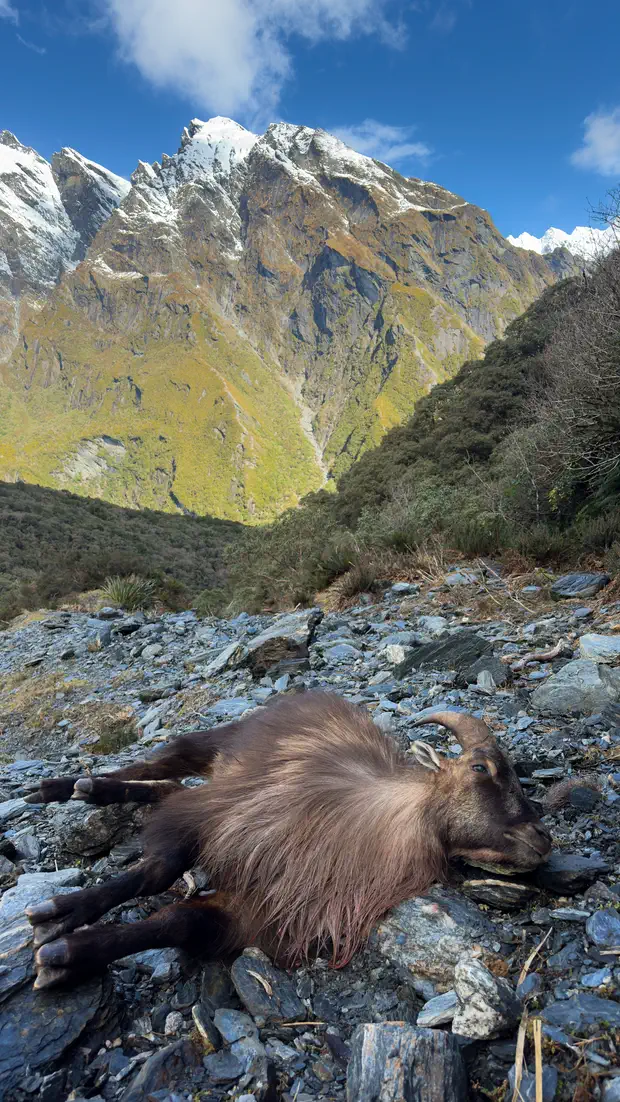
A bull tahr in full winter mane on the shale
The animal

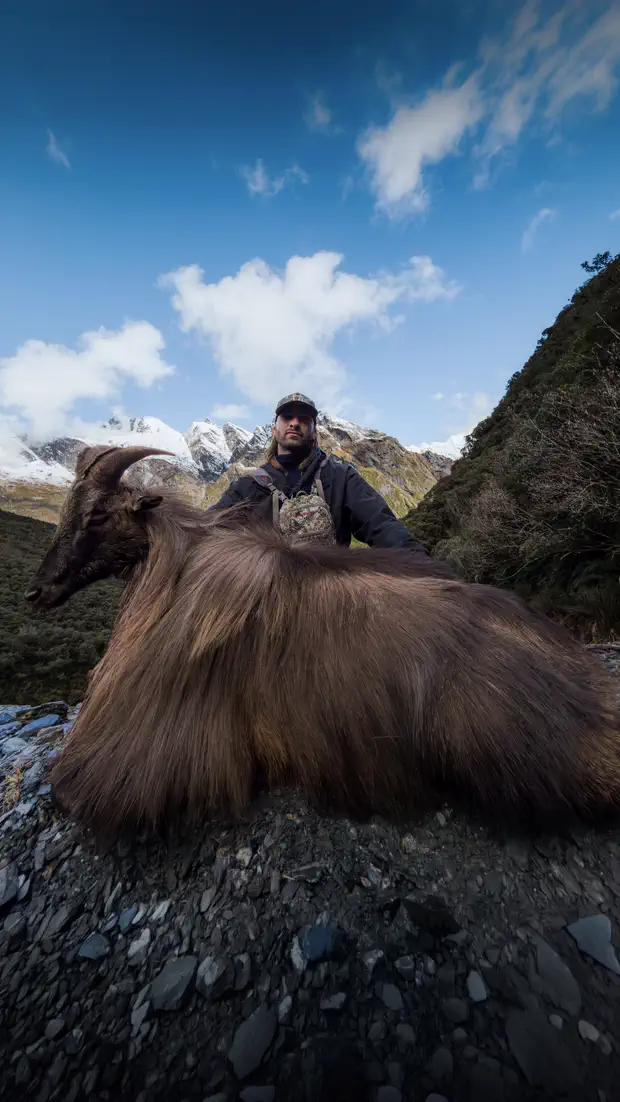
A hundred kilos of muscle crossing cliff faces like it is a footpath. Himalayan tahr have been in these mountains since 1904 and they are better at them than you will ever be. The bulls carry a mane through winter that is the whole reason people come. What goes up the hill easy comes down it on your back.

A kea in flight showing its orange underwing
The company

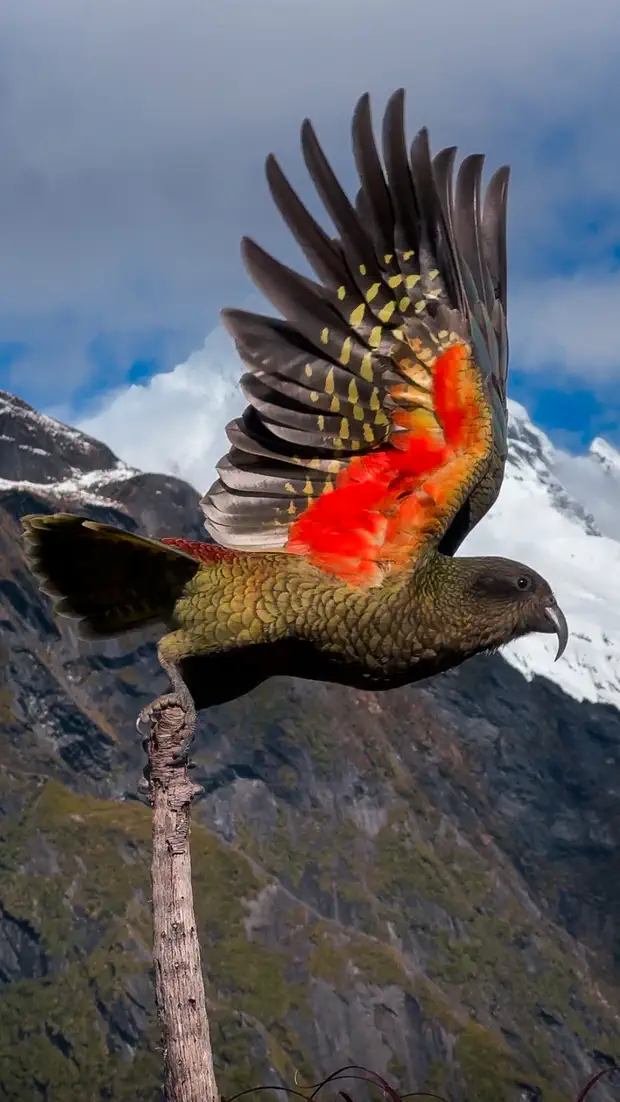
Kea are the world's only alpine parrot and they exist nowhere on earth but the South Island, mostly on the western side of these mountains. They will follow you up from the valley and sit above you while you glass. Sit down for a feed and they will swarm you and go through the pack. Cross between an eagle and a parrot, and they know exactly what they are doing.

A chamois buck standing in wet tussock
The other one

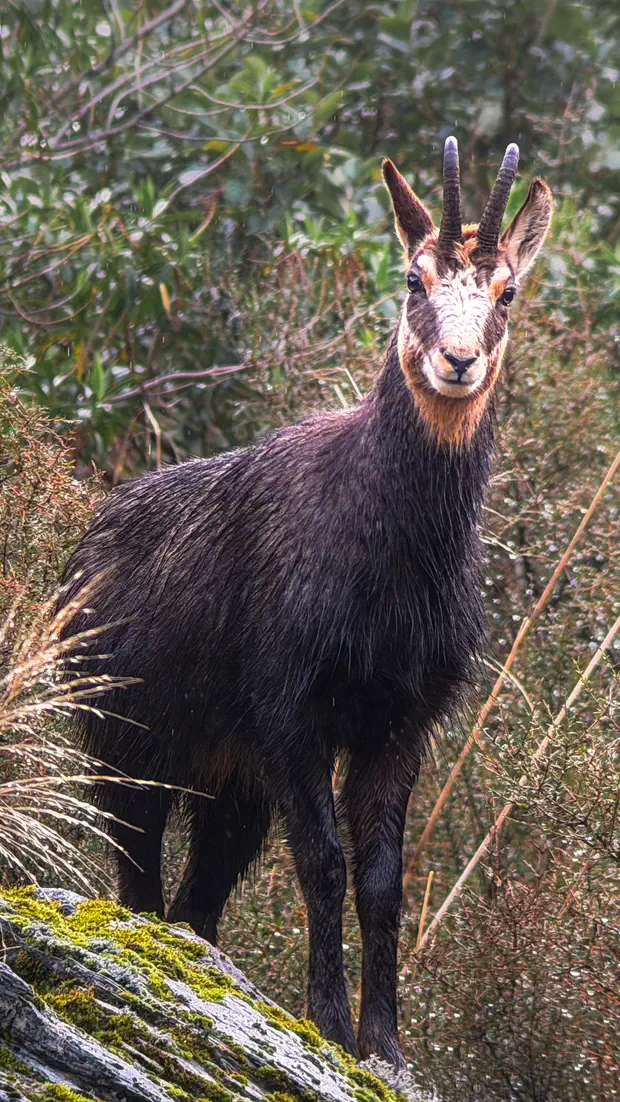
Chamois share the same country, lower and in the scrub more often than the tops. Smaller, faster, and harder to get a look at. Nobody is promising you one. If the chance turns up and it is a safe shot, you take it.

The shot

Spotted in the scrub across the valley. Into position, dial the gun for the distance, and wait for him to step clear.

Holding up a caped bull tahr on a snowy ridge
The cape

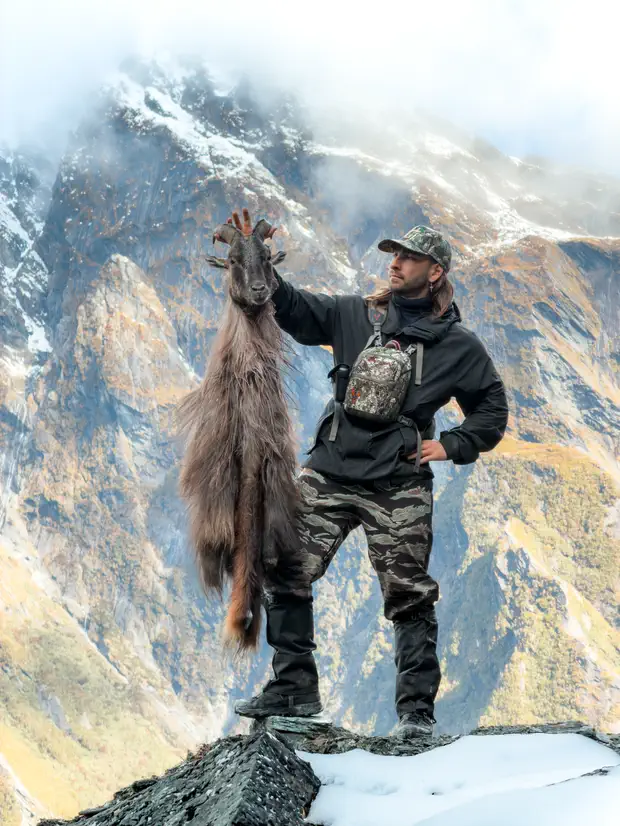
If you get one, we help you cape it right there on the hill: the hide off the shoulders and neck with the head still on, ready for a shoulder mount. Do that part properly and the taxidermist takes care of the rest. Caping is included, same as the trophy fee.

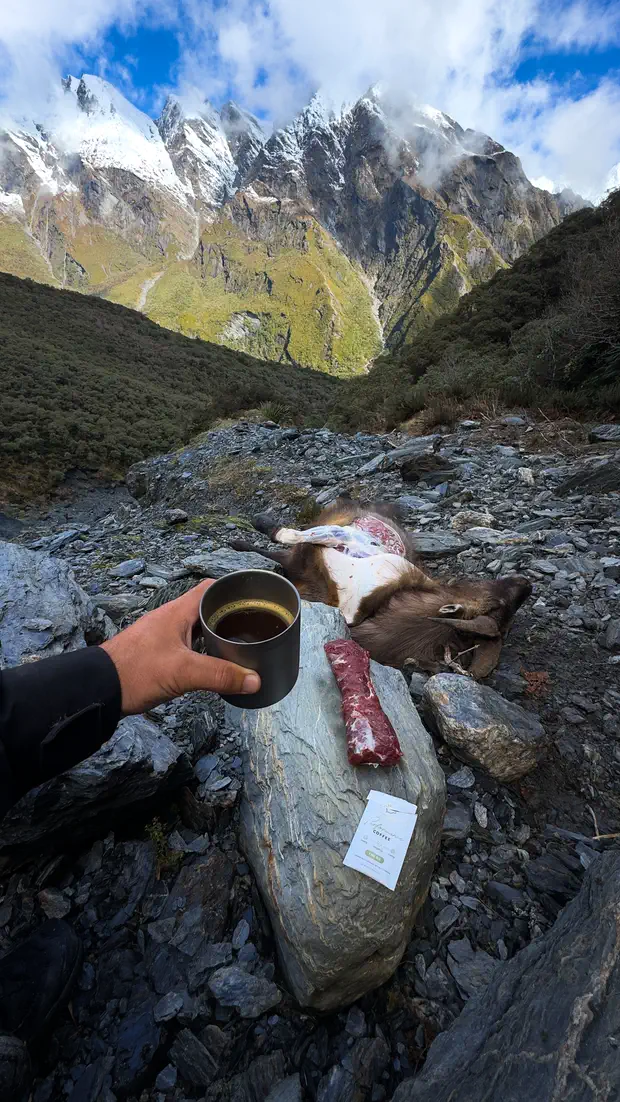
A skinned tahr on the rocks with a backstrap laid out and a coffee in hand
The meat

Skinned and broken down where it fell, on the rocks, with the valley below you. Backstraps come off first and they are the best thing you will eat all year, cooked up at the hut that night. Same as the weekend: you get shown, then you do it yourself. Coffee is optional but strongly encouraged.

On the mountain Swipe throughScroll across
Door open on the way in
The drop off
Tahr country
The water up there
Kea, watching
Making your own way up
Chamois
Cooking up your kill
The mountain uber
The part nobody puts on a brochure

Not every animal you see is one you take. The shot is often possible when the retrieval is not. One slip on frozen snow and you are sliding down a chute and over a bluff. Snow bridges collapse, loaded gullies avalanche, and afternoon sun sends rock down the same lines you climbed that morning. A hidden gully turns three hundred metres into three hours.

So the call gets made on the ground, every time, and sometimes the answer is no. Nobody can promise you an animal. You will get your opportunity and the mountain decides what you take home.

It gets cold out there

The forecast

Live off the weather service for both blocks, for the days you are actually on them. The New Zealand dates are still tentative, so that one fills in as it gets closer.

Silent GroveNew South Wales ยท 728m

Fri 9 to Sun 11 Oct
Daytime --° Feels like --° Loading
Overnight --° Feels like --° Colder in the gullies
--Wind km/h
--Rain chance
728mElevation

Fox GlacierWest Coast NZ ยท tops at 1500m

Thu 15 to Mon 19 Oct tentative
Daytime --° Feels like --° Loading
Overnight --° Feels like --° Colder on the tops
--Wind km/h
--Rain chance
163mValley floor

Read the fine print

Those are valley numbers. Silent Grove reads colder again sitting still in a gully, and the frost hollows go lower still. New Zealand is the bigger lie of the two: that figure is the township on the flat, and you will be a kilometre and a half above it.

Across the last ten Octobers, up at 1500 metres on that coast, the average day got to 5.7°, the average night went to minus 0.8°, and more than half of all nights sat below freezing. It rained on 55% of days. Nobody has ever come back saying they packed too many warm clothes.

Before you come

All the info you need

Twenty-five volumes on the animals and the craft, from the block to the tops. None of it is homework, all of it makes both trips better, and every one has a field game in the back if you like keeping score. Pull one off the shelf.

Move to either end of the shelf to browseSwipe the shelf to browse